component component--image
component component--combo
Building more sustainable and intelligent cities

The construction sector generates about 39% of the world's carbon emissions, according to the World Green Building Council. On the other hand, green building in emerging cities represents one of the largest investment opportunities of the next decade: USD $24.7 trillion by 2030. Most of this growth will be in the residential sector, particularly in middle-income countries.

Additionally, green building projects stimulate low-carbon economic growth and create skilled jobs, as well as promote the rational use of resources such as water, energy and building materials.

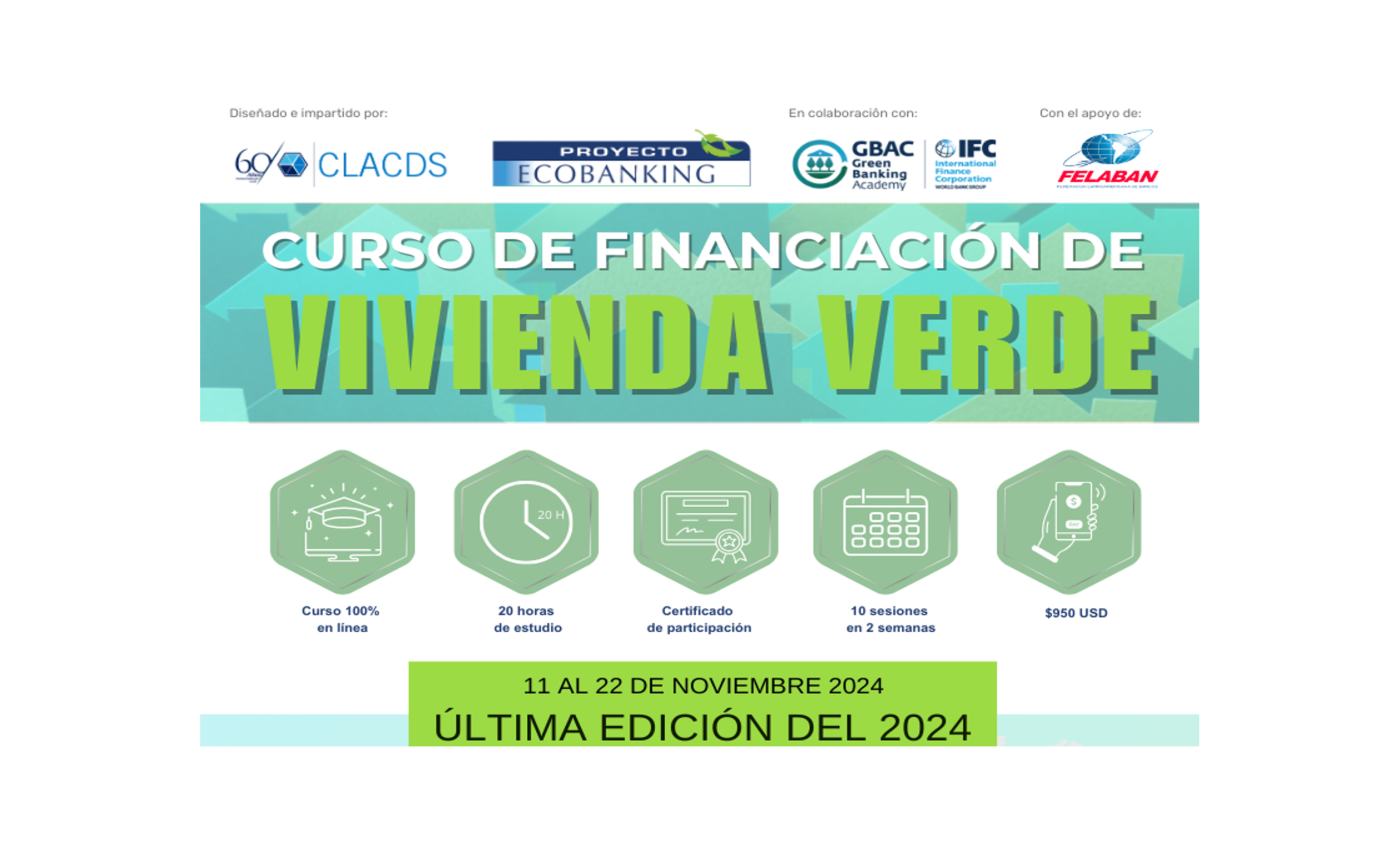
The Green Housing Finance course addresses new trends in the sector, their contribution to sustainable development and the resulting benefits for all involved.

component component--combo
Aimed at

Professionals in the banking sector who work in the areas of risk, credit, corporate banking, who seek to strengthen their analytical skills on the subject.
Other professionals involved in the sector, such as real estate developers, owners and investors, architects and engineers.

component component--cards
Main Objectives
To provide information on the evolution, fundamentals, trends and the variety of financing mechanisms, technologies and applications existing in the green building sector.
Strengthen the financial sector's ability to capitalize on the opportunities presented by sustainable finance and green housing finance.
To deepen the arguments showing the financial and comfort advantages of sustainable construction.
component component--cards
To learn about international green building initiatives, success stories and best practices.
Learn about the most commonly used green tools, methodologies and certifications for sustainable housing.
Review the fundamentals of structuring a green financial product for the construction sector.
component component--cards
Themes per module
Phase 1: The business case for green housing:

Fundamental concepts for a better understanding of the dynamics of the green housing sector, such as (i) the elements that define this type of housing, (ii) the market players, (iii) the entities that help promote and certify them, among others.
Global trends and challenges in the sector and how these variables affect the context of the region.
The role of energy efficiency and renewable energy alternatives in the construction or adaptation of housing.
Information on the supply of materials, efficient technologies and the most widely used standards.

Phase 2: Development of a financial product:

Information on the variety of existing financing mechanisms, technologies and applications, so that participants can visualize the most feasible options, according to the strategy of the organization in which they work and their operating market.
Review of energy certifications, national seals and international certifications.

Phase 3: Gaining Board approval:

Through a practical and interactive activity, and according to the opportunity and challenges identified, each participant will be able to propose the most feasible green housing related financial product for the organization he/she represents, including the main elements from a technical, market and financial point of view.
The participant will evaluate their own work, as well as that of their fellow participants.

component component--cards
What is required of participants for the course?
Dedicate an average of 2 hours daily (not continuous) for two weeks.
Have access to a computer and internet.
Propose/implement new financial products or changes to existing products within their organizations.
component component component--logos-slider