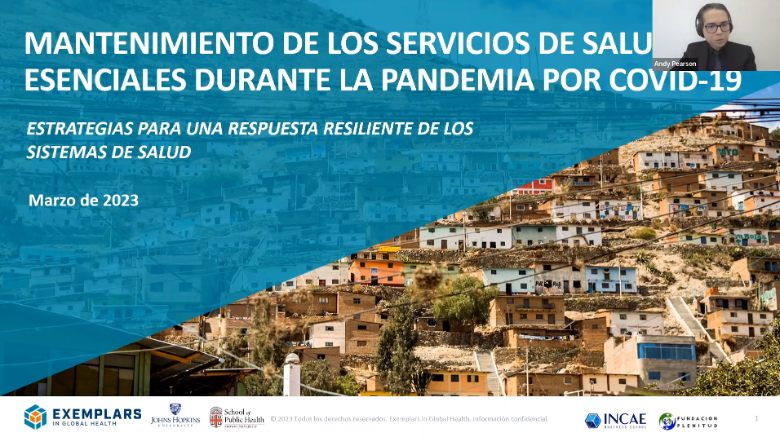
Last Thursday, March 2, INCAE Business School, Fundación Plenitud and Exemplars in Global Health organized a webinar to present the main findings of a research on the response of health systems to maintain essential services during the response to COVID-19. The research focused on identifying strategies and best practices that enabled the maintenance of essential health services during the crisis.
During the event, the cases of Costa Rica and the Dominican Republic were presented, as well as a comparative analysis of the responses of six countries that are part of the global research, including Sri Lanka, Thailand, Uganda and Ghana. In addition, the webinar included a comment section in which representatives from the Pan American Health Organization (PAHO) highlighted key points of the study.
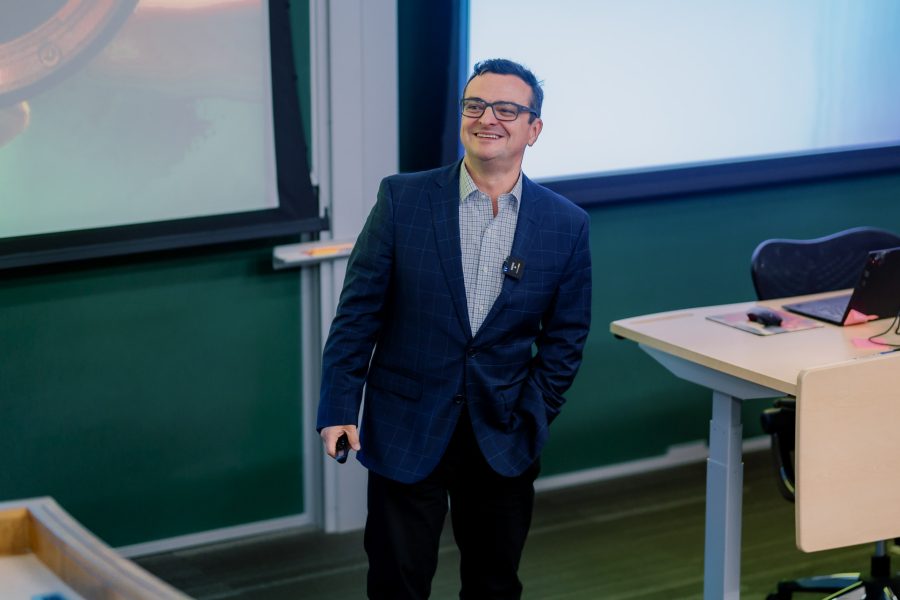
Andrea Prado, Associate Professor at INCAE, highlighted for the case of Costa Rica the importance of vertical and horizontal integration of the health system to maintain continuity of essential services during the pandemic. Professor Prado emphasized how the Costa Rican Social Security Fund (CCSS) has successfully implemented this strategy, allowing the transfer of patients through effective coordination and communication between Primary Health Care, hospitals and specialized centers.
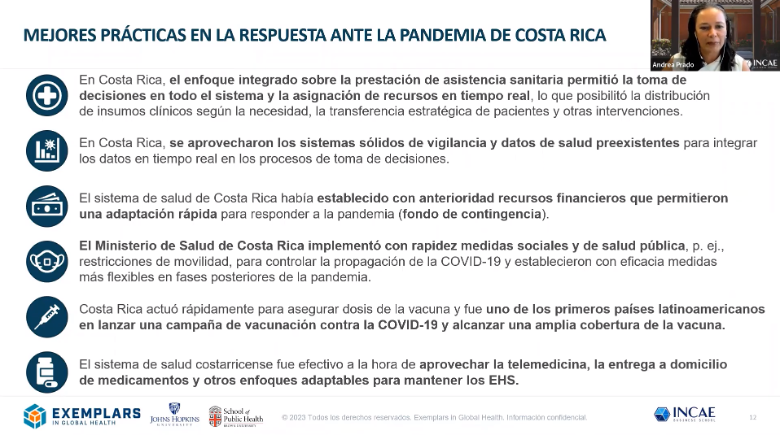
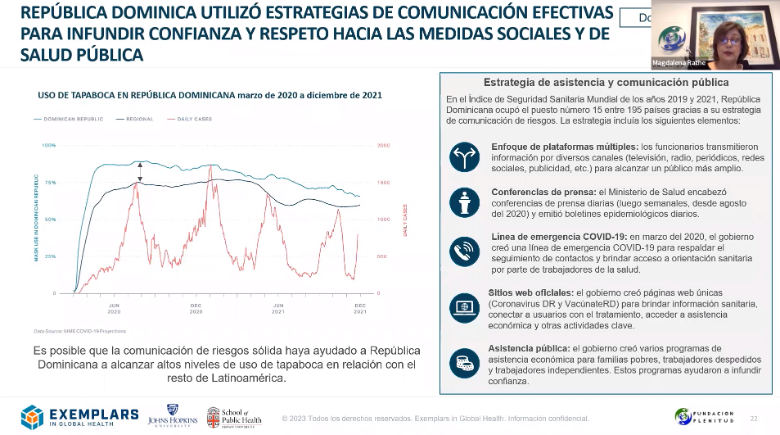
On the other hand, Margarita Rathe, Founder and Executive Director of Fundación Plenitud, emphasized that in the case of the Dominican Republic, leadership and governance in the response to COVID-19 were important. Rathe highlighted that these factors were fundamental to guarantee an effective and coordinated response to the pandemic, mainly when it came to summoning communities to comply with social and public health measures, developing mass vaccination campaigns; and finally to coordinate the necessary funding and resources through public-private partnerships.
During the webinar, attendees were able to learn from the experiences of other countries and reflect on the challenges, lessons learned and opportunities facing health systems to improve response to future public health emergencies. Andy Pearson, Senior Research Fellow at INCAE, mentioned that the comparative study sought to identify key measures at the national, government and community levels, as well as adaptations to service delivery that healthcare providers made to maintain patient care in the midst of the pandemic.
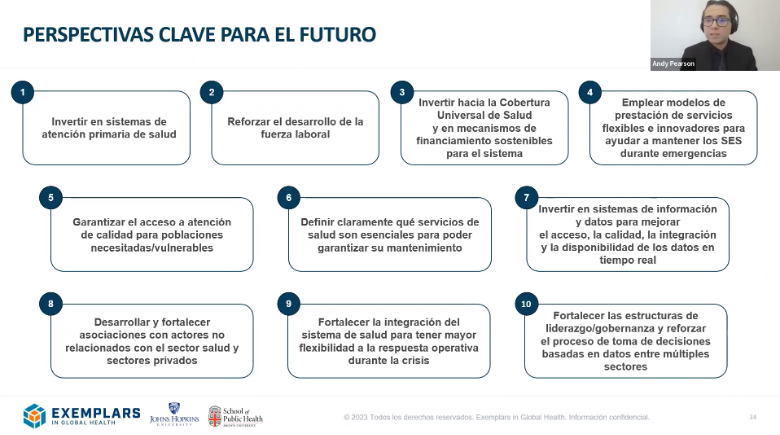
Dionne Patz, PAHO Public Health Policy and Programs Advisor, highlighted the importance of generating evidence at the national level for decision-making, planning and resource allocation in the future, and also to catalyze the good practices identified in the report. Finally, Dr. Roger Montes, PAHO Advisor on Health Systems and Services, called on each country to define which essential health services should be maintained with or without a pandemic, taking into account the achievements that have been made and the epidemiological profile at the national level.
The research was supported by theExemplars in Global HealthProgram, an initiative that aims to identify and analyze exemplary practices in health systems around the world. The program seeks to understand the key characteristics that make health systems effective, and to share these learnings with the world to improve global health.
The recording of the webinar is available on the YouTube channel at INCAE HERE.
For more information on the research findings, please visit the Exemplars in Global Health Program website HERE for Costa Rica and HERE for the Dominican Republic.
About the Exemplars in Global Health program
Exemplars in Global Health (EGH) brings together researchers from around the world with the mission to identify and analyze exemplary cases in Global Health, and disseminate learnings that are replicable in countries with similar contexts. EGH aims to help decision-makers and other relevant actors at the national level to allocate resources, develop evidence-based policies and make strategic decisions based on the experiences of their global peers.
Our lines of action focus on the following topics: stunting reduction, under-five mortality reduction, community health worker support, vaccine administration, mass drug distribution, neonatal and maternal mortality, COVID-19 response, family planning, anemia among women of reproductive age, women's health and well-being, primary health care, and adolescent sexual and reproductive health and rights. This particular research is within the framework of pandemic preparedness studies.