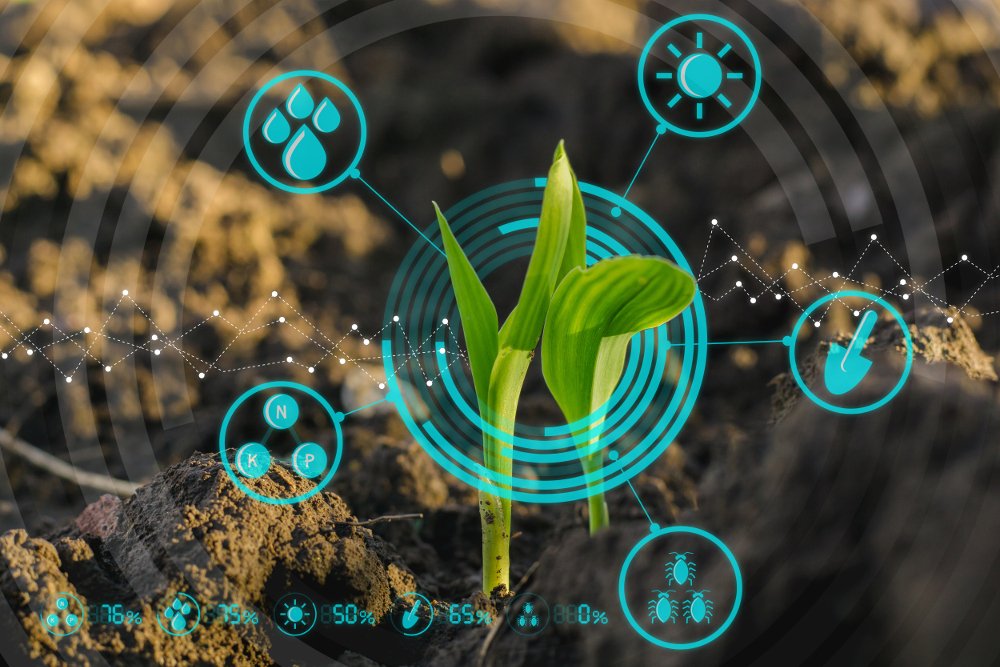
From the invention of the ox-drawn plow in ancient Egypt to the first gasoline-powered tractor in the early 20th century, technology has revolutionized agriculture at regular intervals.
Now with the Fourth Industrial Revolution things are no different. In 2017, a robotic farm in the UK did its first fully machine-driven harvest . Autonomous vehicles seeded, fertilized and harvested five tons of barley. In the next two to three years, digital technologies in agriculture will have considerable market coverage worldwide, according to estimates.
In January, a World Economic Forum report developed in collaboration with McKinsey & Company identified 12 emerging technology sectors that have the potential to succeed across several dimensions of the food system. They could change the way food is demanded, through alternative proteins and personalized nutrition; for example, promote linkages along the food value chain, through mobile services, Big Data, Internet of Things and blockchain-enabled traceability; and create effective production systems, through water sensors, genetic modification and other scientific advances that make agriculture more precise and higher-yielding.
Taken together, these innovations will transform a sector that is often characterized in too many parts of the world by poverty and waste. But the potential of Fourth Industrial Revolution technologiesto promote sustainable development in rural areas cannot be taken for granted. Although global food production quadrupled between 1960 and 2010, largely thanks to technology and expanding trade, this did not result in better outcomes for food producers, consumers or the environment.
The real question, then, is not whether the technologies of the Fourth Industrial Revolution will help us produce more food. It is whether they have the potential to change the current model to a smarter system that could improve conditions for producers, consumers and the planet. Some of the most interesting developments may not be in farming, but in disruptions in supermarket aisles, online and aggregation applications.
The potential for change lies with the 7.6 billion people who consume them, but also with many other actors in the chain. Digital technology is a game changer for the agrifood system, as it drastically reduces the cost of linking buyers and sellers in markets. In turn, greater efficiency in cash flow and derivative markets could lead to higher prices for farmers and greater competition among intermediaries.
Producers and intermediaries must rethink their business model and move towards more integrated food operations as a result of digital disruptions, including the democratization of crop price information.
In recent years many forums have become hotbeds of creativity, where entrepreneurs rethinking food mingle with advocates, politicians and researchers, but it is too early to declare victory for inclusive and sustainable development. Disruptive technologies could either help a fairer agriculture or consolidate a system dominated by a few companies that dominate the market.
(Excerpt from the World Economic Forum's Fourth Industrial Revolution for the Earth series article by Juergen Voegele, Senior Director, Agriculture and Food Global Practice, World Bank)