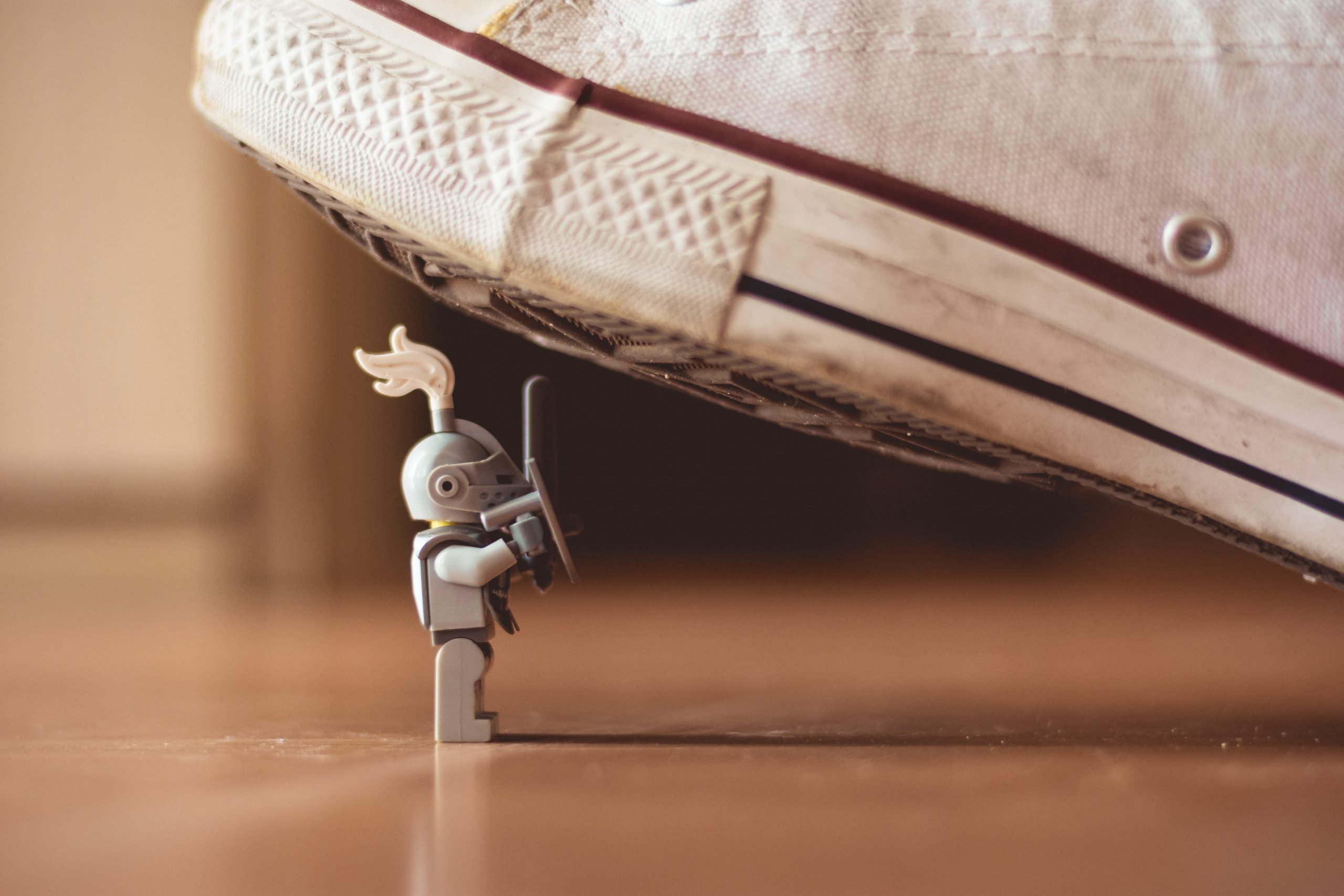
Why do some people face any obstacle, while others tend to give up easily? Perhaps it has to do with their level of self-efficacy, an individual's belief that he or she is capable of successfully completing a given task.
The term was introduced by the Ukrainian-Canadian psychologist Albert Bandura, who believes that self-efficacy plays a mental function of self-regulation by revealing when something is worth trying and when it is not.
That is why it plays an important role when facing any challenge and becomes a fundamental aspect for those people who want to be successful. Bandura points out four ways to increase your level of self-efficacy:
1. Performance achievements: Past experiences are important because they show you which tasks you have mastered. If you were successful in a particular situation, you will be more confident that you can do it again. That is, if you have already learned to speak a second language, you will be more willing to learn a third, compared to someone who only speaks your native language.
2. Vicarious experience: seeing a person successfully perform certain activities, you will be inclined to believe that you could also do them. This happens in support groups where members see their own struggle reflected in the testimonials of others and those who have overcome their problem become motivation for others. So, when you are faced with an obstacle, turn to people who have gone through the same thing and can guide you on how to solve it.
3. Verbal persuasion: having someone who is constantly validating your ability to do a job is the best confidence booster. A study called "First Steps," conducted by the Universities of Eastern Finland, Turku and Jyväskylä in 2015, showed how this influences early in life. The research confirmed that children develop better academic skills, greater motivation to set goals and feel more confident in their abilities when they have empathetic, supportive teachers who create a positive classroom environment.
4. Emotional and physiological response: your emotional reactions and responses to certain situations affect how you feel about your abilities. For example, if you become nervous about speaking in public, you may develop a low sense of self-efficacy in that setting.
However, if you learn to minimize stress and elevate your mood in the face of any difficult circumstance, you can improve your level of self-efficacy and have a better emotional response.
Most of the time overcoming an obstacle will not depend on your ability, but on how you use your skills. You may have the same or better skills than a successful person, but you may not know how to use them.
In that sense, through self-efficacy it is possible to modify your behaviors and attitudes to improve your professional and personal quality of life. Being self-efficacious will condition your mind so that all effort is focused on achievement, will help you to improve your motivation and be more productive in those things you set out to do.
People with a strong sense of self-efficacy see problems and challenges as opportunities, develop a sense of commitment to the activities they undertake, and recover quickly from any failures or disappointments.
So reflect, when facing a new challenge; do you feel you are up to the task and can you achieve the goal?