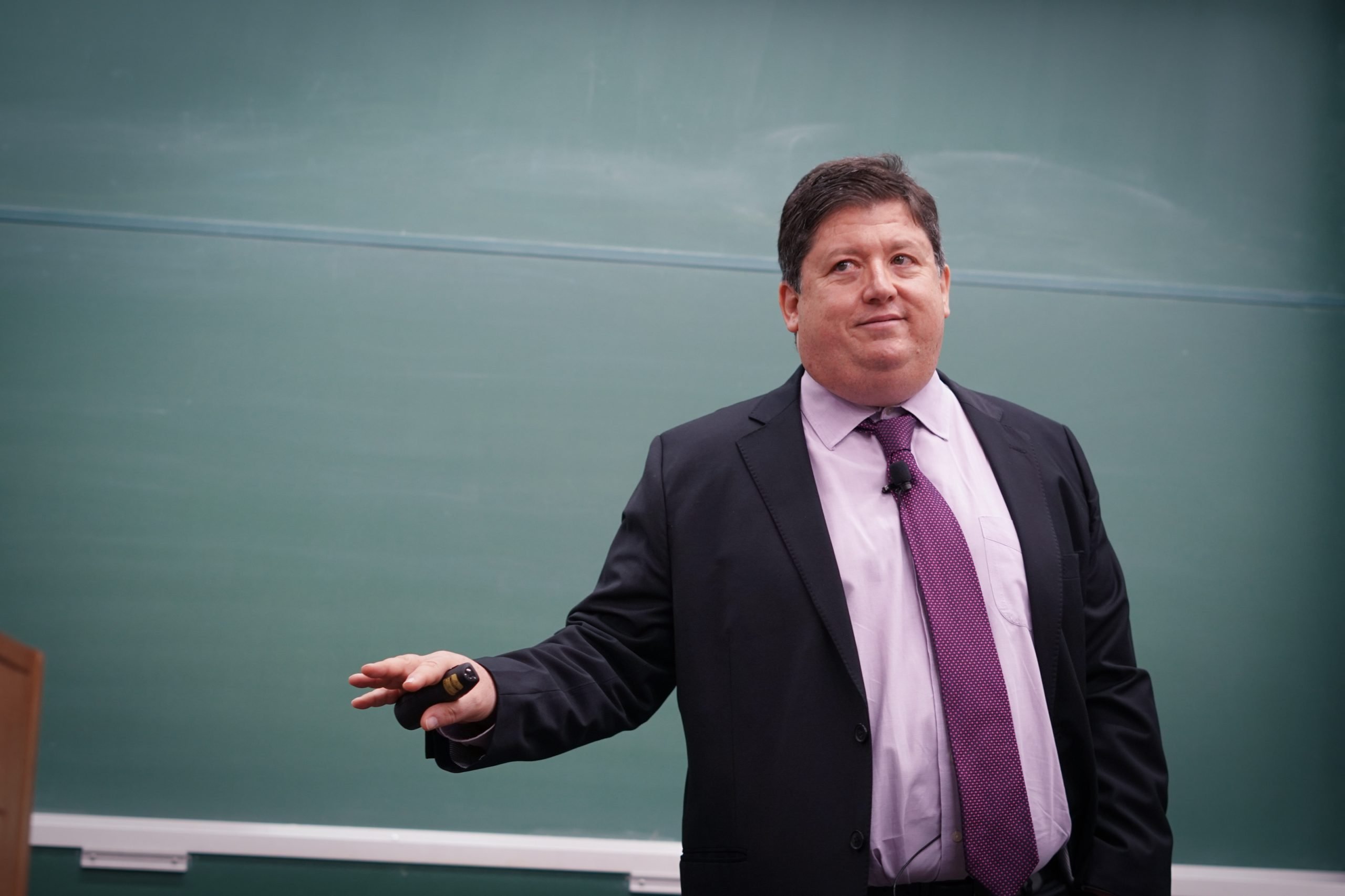
Professor Alberto Trejos, Ph.D., academic director of our executive program Economics for Business in Latin America and professor of our Executive MBA, shared in one of our webinars some of the things a manager should know about Economics in times of uncertainty.
Professor Trejos comments that, although economic analysis can be delegated to specialists, what cannot be delegated is what a manager does about it. The question goes back to the manager, since major decisions are strategic and affected by the environment. The company is surrounded by market, country and world circumstances, so it must be prepared.
For decision-makers, the order and the central issues are within the organization, trying to ensure that all departments function correctly, but the environment cannot be overlooked, as the big surprises often come from outside the company.
This is why managers must ask themselves: What does it mean for my own strategy, what direction should I give it, what decisions should I make about it?
A strategy is required to lead the organization to its goals and this means addressing logistical, financial, human and operational issues, but the results and the selection of the right decisions to implement that strategy are impacted by what is happening around it, and therefore must be taken into consideration when choosing a route.
"The higher up you are in the organization, the more the decisions I have to make are linked to the outside world," says Professor Alberto Trejos, also a former Minister of Foreign Trade of Costa Rica. The environment must permeate all decisions made.
These are the environmental factors affecting the company that must always be considered:
-
The policy
-
My markets
-
My country
-
The world
In addition, the professor explains how macroeconomics affects companies for decision making and the importance for a manager to know how it is measured, how it behaves, what it determines, how it affects him/her and how he/she reacts to 4 aspects of the economy:
-
National Income: How much do people have in their pockets?
-
Inflation rate: What will happen to costs and prices?
-
Interest rate: What is the value of liquidity over time?
-
Exchange rate: How easy is it to compete with foreigners?
Everything is related to the analysis of my company and its environment.
In line with the topics addressed, the professor highlighted how through our Economics for Business in Latin America program and the Executive MBA, one can delve even deeper into these issues.
We invite you to learn more about the topic in the recording of the Webinar: What should a manager know about economics in 2021? Watch the full Webinar here: https://youtu.be/-skY-rPa_WY