Today's market, new generations and the consumer are forcing - perhaps even demanding - a new way of marketing. Following the race for business success and seeing the profitability of the business depends much more on customer retention and personalized customer service than on attraction.
Today, selling means building good relationships with customers, making them feel that their needs are understood. Six points show us how marketing is reinventing itself:
The product model is what we know in all companies, but especially since the 20th century. Today we are facing a consumer who is a bit like a teenager; he has become demanding, he loves us, he hates us, he wants to be with us and he wants to leave us.
The consumer never had the voice he has today, which can be replicated in networks, where he can easily reach his acquaintances or friends, and has the ability to choose, to go with someone else, to buy anywhere.
As a result, there are cracks in the product-centric model:
-Technological change: dominance can no longer be maintained.
-Globalization: geographical advantage disappears.
-The power of the consumer: more intelligent and with more options / demands more personalized attention.
The most important threat to this model is the amount of consumer data that is now available and that allows us to know a lot about the consumer and his behavior, and the challenge is to know how to use this information to our advantage.
Segmentation: From consumer targeting to consumer network management
Before, the way to deal with our consumers was to try to group them into some categories that would allow us to organize our efforts.
As we have had more information, segmentation has evolved into what we call micro-segmentation, but that creates a huge problem for us, because the smaller the segment, the more segments there are to serve and then the marketing and sales functions become unmanageable.
Sales Process: From the short term (sales) to the long term (relationships)
We come from a world very focused on the transaction, on the immediate sale, and we are entering a world where we have to think about the long term, about cultivating relationships. It's a very important change in the game.
The challenge we have is that, in the digital era, after the customer purchase is still very important, it became more and more important.
Branding: From Strategic Branding to Social Branding
Marketing has been reinvented, because if we are moving to relationship marketing, the brand becomes a social brand, designed to build a relationship with a social consumer.
We have a huge number of touch points: email, ads, social media, etc., and there is a particular way to reach each customer.
There is an opportunity to cultivate a relationship.
Buying decision process: From consumer behavior to influencer marketing
We have changes at the time of sale. Now, once we have sold, a new challenge begins, which is to know and understand with each new client we bring in, who he influences, the position he has in networks and how to attract him to positively influence that network.
Consumers trust less and less in advertisements and more and more in recommendations.
They're all about data. You may say you have a CRM in place, you may say you're customer friendly, you may say you have good service, but it doesn't necessarily mean that your business model is effectively consumer-centric.
Being Costumer-Centric implies the ability to align the development and delivery of company-wide products and services with the current and future needs of a select group of consumers to maximize their long-term financial value.
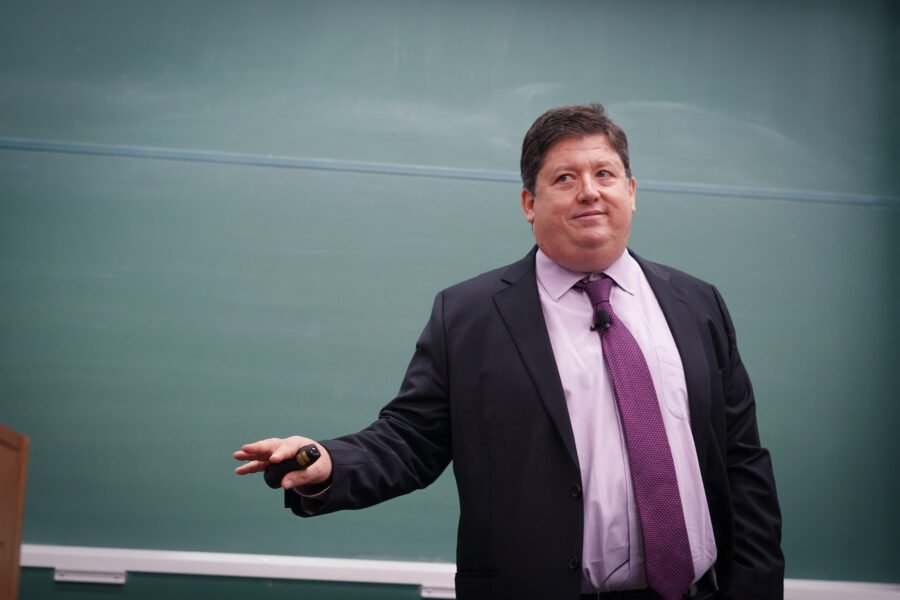
Excerpt from the ExEd Online "The Market Renaissance: How are you preparing yourself?", given by Professor Juan Carlos Barahona.