Although we sometimes lose awareness of it, every minute makes us more integrated, globalized and digital. In other words, our world is more complex and a company's finances are part of this terrain. Financial professionals are obliged to handle the same fundamental concepts with greater solidity, but to know how to connect them with tools and services that two decades ago were seen as from another galaxy.
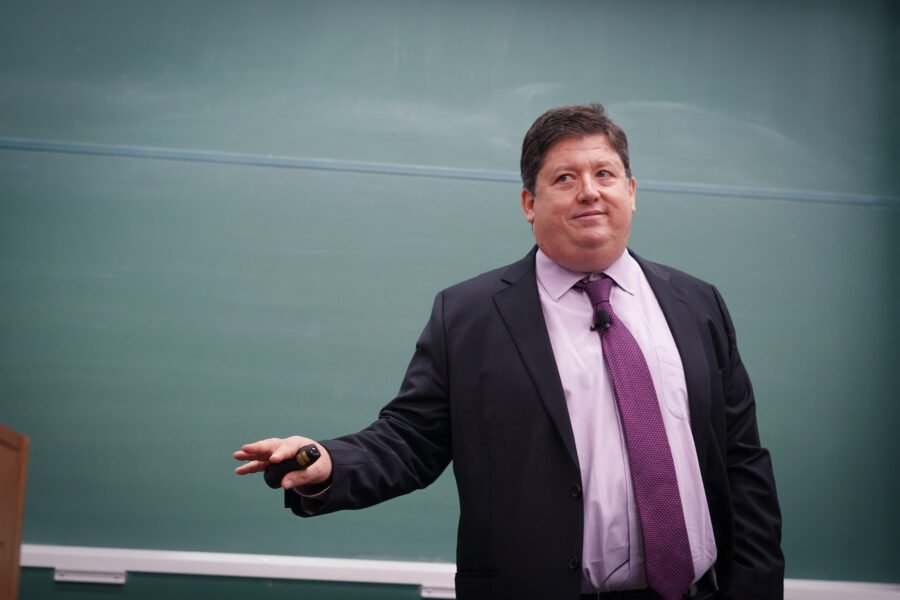
"In Latin America we were behind in services and tools for financial management. As the world has become globalized and digitized, we have access to these services that require new skills and knowledge in the financial area," says Professor Mauricio Jenkins, academic director of the Master's Degree in Finance at INCAE Business School..
Aware of the demand from finance professionals, the Master's program offers the possibility to deepen knowledge in finance and also to obtain a specialization for those who have a more general business background.
With the efficient format of one week of classes per month and the timely participation of UCLA professors to teach financial engineering in California in one of the modules of the Master's program, the program devotes 100% of the teaching hours to finance. This guarantees an in-depth approach, suitable for professionals involved in company valuation, project analysis and financing, management of financial derivatives or companies concerned about their foreign exchange exposure.
These are the usual challenges for the financial manager of a modern company, but now there are added difficulties. Professor Jenkins (Ph.D. in Economics and Finance at Brandeis University in Boston) provides the explanation with his experience as an academic and consultant.
"The person in charge of finance in a company needs to keep up with the times. Perhaps the most important change is the access to those tools and services that were not at hand just a few years ago. This makes the tasks of a company's financial manager much more complex and comprehensive. Yes, there are now services and instruments for financing in international markets, for managing financial risks of interest rates or exchange rates, swaps and other derivatives, financial services developed and delivered on mobile networks, electronic banking, private investment funds, crowdfunding and the like, which introduce complexity for financial managers and also for regulators. These trends are relatively new and we must understand them in some detail if we are to be successful in modern financial management.
- What are professionals looking for in this Master's program?
- They come looking for deeper and also more specific knowledge in finance. Some have done their MBA and have been finance managers or are in the finance department of a multinational. They seek to prepare themselves for a career there or aspire to manage corporate finance.
- Does the age profile of the students matter at all?
- The range is wide. There is a majority of young adults who are career oriented to achieve a promotion in their company or climb to higher responsibilities. We also have older people, some of them going on five decades, who studied many years ago and now see an opportunity to deepen their knowledge in the financial area.
- How does it differ from other master's degrees in Finance in the region?
- I can say that our Master's degree is characterized by the complete emphasis on financial topics, 100% of the teaching hours. Those who have already completed an MBA, for example, will not find here any more courses on marketing, operations or corporate strategy. The program is focused exclusively on finance. That is why we can guarantee a deeper and more specialized approach.