Interview with Prof. Andrea Prado
Andrea Prado is a distinguished associate professor at INCAE, in the areas of organizational change and sustainable development. She received her PhD in Management and Organizational [...]
Andrea Prado is a distinguished associate professor at INCAE, in the areas of organizational change and sustainable development. She received her PhD in Management and Organizations from the Stern School of Business, New York University. She also holds a Master's degree in International Economics from the University of Essex in the United Kingdom.
Several years ago he began to get involved in health issues through various programs that the institution has in that field. That is why at the time of initiating the CAHI project she was an obligatory reference for the creation of the academic path of the CAHI Fellows and the initial development of the program.
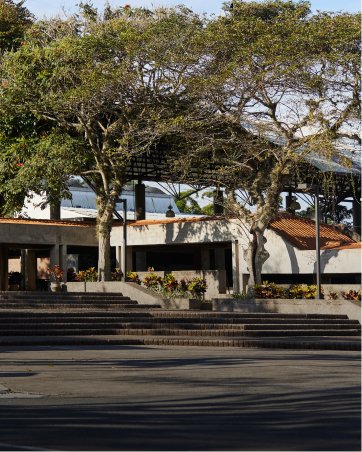
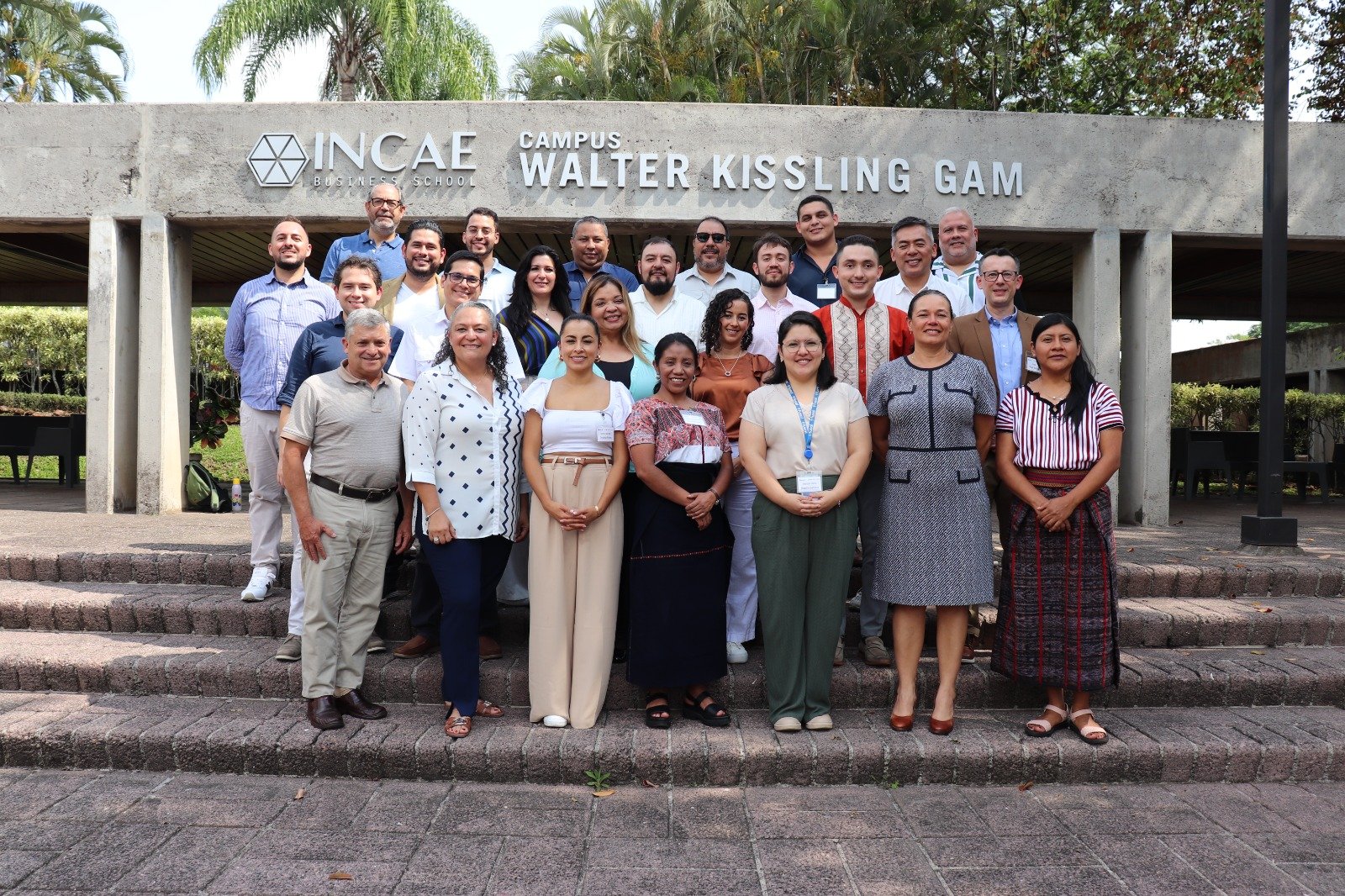
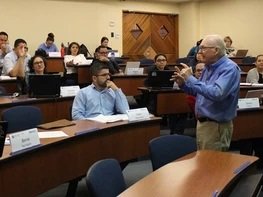
We had the opportunity to talk with her during the second module of the 6th cohort of the CAHI Fellows Program, at the headquarters of INCAE Business School in Costa Rica.
Thank you Andrea for having us. We would like to start by asking you how did your relationship with CAHI begin?
Andrea: It came about through its founder and Chairman of the Board, Mr. Robert Jeffe, with whom I initially met in New York to learn about his vision. From that first contact, a relationship then arose with the Rector of INCAE, with whom we continued a sustained dialogue that led to a first strategic activity. At that time at INCAE we were celebrating our 50th anniversary, so we held a high-profile event in New York, where we began to make the contacts and develop the conversations to create the CAHI Fellows Program.
I was less than a year after returning from my PhD, with all the energy to get involved in the project, bringing my experience in management, business model and sustainability. This has continued to be my contribution over the years, and in the process I have learned a lot about healthcare.
What is your vision of the evolution of the CAHI Fellows Program in these 5 years?
Andrea: Things are undoubtedly evolving, but we have always maintained the emphasis on management, based on a consultation we carried out with several leaders in the region. We asked them about the capabilities that people working in health need to be more effective in their interventions, and the answers we got led us to the need for tools for innovation, management and administration.
That is why with CAHI we have always insisted on the focus on strengthening management skills, team management, projects, budget, strategic alliances, as a central line for CAHI Fellows.
An important element of the evolution is that the CAHI Fellows brand is very well positioned in the region, with a great reputation. It is an honor to say that we are a CAHI Fellow, backed up by what has been achieved with the individual projects, which have had a great impact and the level of intervention has been increasing.
Also, something very significant is that there is more and more collaboration among the CAHI Fellows. The last thing I received is that we have a leader of the first generation who is already working with several fellows from other generations. This type of coordination is already being clearly seen in Panama, for example, and that is part of what we have wanted to achieve from the beginning.
The vision has always been that CAHI's contribution to Central America is the creation of this network of leaders who are driving change.
What else would you say makes CAHI such a unique initiative?
Andrea: CAHI wants to innovate and is doing so. To innovate you have to open space to try new things and that can lead to things failing, this generates great learning. At CAHI we have a high success rate, with few failures, but we know that the leaders who participate in the program face important challenges. Sometimes they lose their position within an organization in their country due to political issues, or they have to interrupt their project due to aspects of the context that are beyond their control and then fail to complete the program.
In CAHI we have learned from that, the selection process includes those experiences so that we work to select projects whose chances of success are higher and those leaders who show greater commitment and ability to manage their initiatives. After 5 generations, the CAHI Fellows Program is highly recognized by social security in different countries.
How do the learnings of the CAHI Fellows Network transcend?
Andrea: In addition to creating the new network of leaders in Central America, CAHI also has the purpose of generating knowledge about practices, because it may happen that a group of health leaders in Nicaragua are developing a very successful initiative and there is an opportunity for another group of leaders in Guatemala to learn from that and there is an exchange of knowledge that increases the impact of the different interventions.
We have documented some of these practices through case studies of CAHI Fellows' projects, which are then shared with them in classes and registered in international registries such as Harvard Business School. This broadens the impact of the program, because knowledge is being generated about good practices, which extends beyond the Network.
How do you see the evolution of the CAHI Fellows Network at the present time?
Andrea: After 5 years we already have 100 CAHI graduates, so we have started to measure and identify how the different Fellows are connected, for which we are working in collaboration with New York University. From INCAE we have mapped the connections between CAHI Fellows, beyond those of the same generation, and we have identified that they are connecting across countries and across cohorts. The exchange is mentoring, generating knowledge that they share with their peers. In addition, at the national level they are also consolidating, at this moment we can say that the strongest networks are in Costa Rica, Panama and Guatemala.
We have also begun to study the profile of those CAHI Fellows who make the most connections, in order to identify the characteristics necessary for this so that we can carry out better selection processes.
In this process we have identified, for example, that the profile of the entrepreneur is very conducive to collaboration and networking.
What do you see as CAHI's vision for the future?
Andrea: I think we should focus on strengthening the network, on those connections that become specific projects and generate change. We have a group of leaders working on their specific initiatives, with profiles that indicate that they will continue to hold important positions or generate significant influence in the health sector. I believe that what we need is to articulate efforts and develop strategies in coordination with the members of the Network, in order to influence the health agenda in the different countries of the Region. I believe that this is where CAHI should move forward, understanding that the basic academic program is consolidated.
Is there anything else you would like to add about the CAHI Fellows?
Andrea: For me all of them are relevant and I consider their projects as my children, because of the contributions I have been able to make to each one of them to help them move forward. I hold them in a special place, I keep in touch with them and I am always available to support them. I know all five generations, and I have had the opportunity to have a professional and even personal relationship with all of them, with a high level of commitment to the region. As a Central American, I am very grateful to them.
Finally, I want to reiterate that I am very grateful for the commitment of Robert Jeffe and the entire CAHI Board of Directors, because here at INCAE we have been able to see their commitment and the uncommon way in which they are involved in the project, attending meetings, maintaining the dialogue, being critical when they need to be. His vision and leadership have been essential for the development of this project.