Central America's vast cultural and natural mosaic is as diverse as its history over the past 200 years. Since their independence, the countries of the isthmus have traveled paths of transformation, facing challenges but also reaping achievements. To capture the essence of this journey, we will take life expectancy as a comprehensive indicator that reflects, in many ways, the development landscape of the region.
Life Expectancy: A Comprehensive Indicator
Life expectancy is the average number of years a newborn would live if age-specific mortality rates in the current year remain the same throughout his or her life. Essentially, it is a reflection of the healthcare system, quality of life, access to education, security, economic stability and environmental policies, among others. Thus, it is a perfect window to understand the holistic development of a nation.
Historical estimates find that in a pre-modern and poor world, life expectancy was close to 30 years in practically the entire world. However, from the second half of the 19th century onwards, life expectancy began to grow at an accelerated rate until it reached the current values of 72.8 years for the world average. Even so, there are large differences between regions and countries. For example, in 2021, the most recent data, Oceania leads with 79.4 years; but Africa averages 61.7 years. And it is important to mention that the COVID-19 pandemic meant a drop in life expectancy in practically all regions and countries of the world.
Independent Central America
Considering the best available historical data for each country in the region, we find that in 1875, Costa Rica had a life expectancy of 30.21 years, similar to the world average. However, in the twentieth century it improved its performance, surpassed the world in 1920 and surpassed Latin America and the Caribbean in 1950; with the most recent data, as of 2021, it has the highest life expectancy in Central America with 77 years. Guatemala, in 1900, had a life expectancy of 24 years, and despite its growth, it has not managed to surpass the average of Latin America and the Caribbean, although it has surpassed the world average; in 2021 it has a life expectancy of 69.20 years.
Nicaragua, with data since 1920, has shown growth, reaching 73.80 years in 2021, practically tying the average for Latin America and the Caribbean, which, by the way, dropped due to the pandemic. El Salvador and Honduras, despite their progress, remain close, although still below the Latin American average, but have managed to surpass the world average, and have a life expectancy of 70.70 years and 70.10 years respectively. In general, the CA-4 countries managed to surpass the world average in the 1990s. Finally, Panama, with data since 1930 and an initial life expectancy of 36 years, has experienced sustained growth, surpassing the world average in the 40s of the last century; standing out in the region together with Costa Rica with 76.20 years in 2021, also surpassing Latin America and the Caribbean.
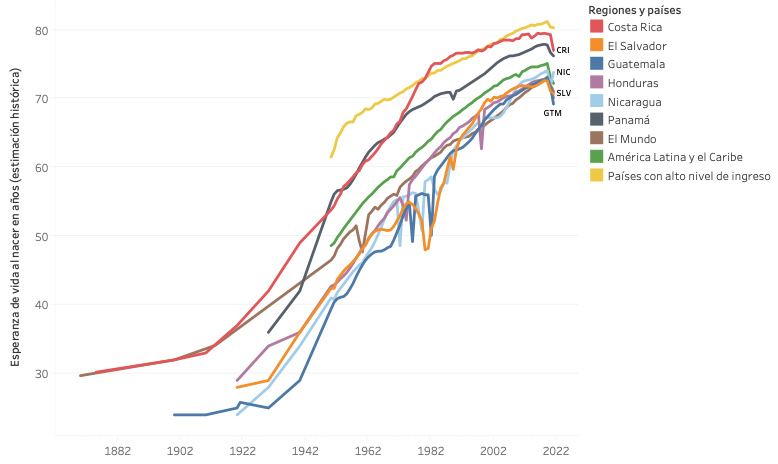
Figure 1. Life expectancy (years). Source: Own calculations with data from UN WPP (2022); Zijdeman et al. (2015); Riley (2005).
Strengthen and consolidate
Although in the region only Costa Rica and Panama exceed the average for Latin America and the Caribbean, they are still far from the average life expectancy of high-income countries, which by 2021 will be 80.30 years. In this sense, throughout the region there is a need to strengthen and consolidate issues that have a high impact not only on life expectancy but also on the quality of life of people, such as:
- Education: Literacy and access to education are key factors in improving quality of life. These advances are reflected in higher life expectancy, as an educated population tends to make more informed decisions about their health and well-being.
- Health: The increase in life expectancy in the region is due in part to the reduction in infant mortality and improved access to health services. The coverage and efficiency of the health system must continue to improve.
- Economy: With more diversified and robust economies, citizens have better opportunities and, therefore, a better quality of life. The diversification and productive complexity of Central American economies must be deepened.
- Peace and Stability: The consolidation of the rule of law and the reduction of armed conflicts also have an impact on life expectancy. Living in peaceful and stable environments is conducive to overall well-being.
Mitigate and prioritize
But we must also mitigate and address aspects that limit the region's growth potential, challenges that are present today in each of our countries and affect both life expectancy and the capacity to generate social progress and economic prosperity in the region:
- Inequality: Despite economic growth, not everyone has equal access to opportunities, which is reflected in disparities in life expectancy among different sectors of the population.
- Violence: In places with high crime rates, life expectancy can be negatively affected.
- Environmental Challenges: Natural disasters and climate change affect infrastructure and available resources, indirectly impacting life expectancy.
- Governance: Corruption and lack of transparency can affect the equitable distribution of resources essential to quality of life.
Consolidating a region where people live more and better lives
The journey of more than 200 years of an independent Central America highlights a remarkable evolution in life expectancy, which is an indicator of its development and level of well-being. The data show that there have been achievements and improvements, but there are still significant lags and challenges that must be addressed to reduce the gaps with Latin America or more economically prosperous countries. In this sense, it is crucial that governments, businesses and citizens work together to overcome these obstacles, considering mitigating inequality in citizens' capabilities and freedoms, adapting to environmental challenges, and strengthening governance. Finally, life expectancy is not just a number; it is a reflection of the quality of life and opportunities of its inhabitants. Looking to the future, it is essential that the region continues to work to build a more just, resilient, socially progressive and economically prosperous isthmus that will tell a success story for the next 200 years.