Manager and technician need to have a political agenda
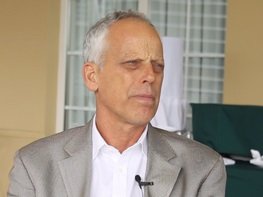
Interview with Prof. Forrest D. Colburn
Forrest D. Colburn is a professor in the Department of Latin American and Caribbean Studies at Lehma College and in the Ph.D. and M.A. programs in Latin America and the Caribbean.
Forrest D. Colburn is a professor in the Department of Latin American and Caribbean Studies at Lehma College and in the Ph.D. and M.A. programs in Political Science at the City University of New York (CUNY), where he has taught since 1997.
He has been for many years associated with and teaching at the Center for Competitiveness and Development at INCAE Business School, where he has also participated in several research projects. He has an undergraduate degree in economics, a master's degree (1980) and a doctorate (1983) in Government (public policy) from Cornell University.
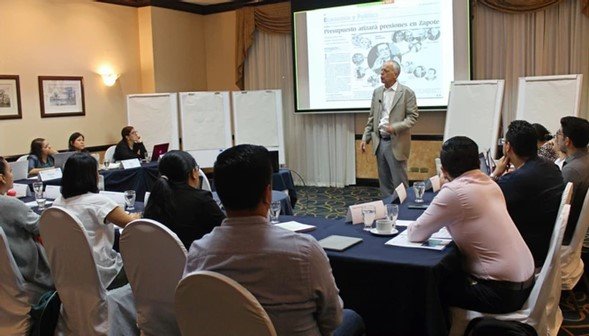
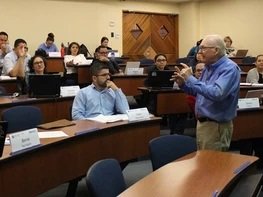
In the framework of his class on politics, as part of the CAHI Fellows program, we had the opportunity to interview him.
To begin, please tell us about your experience and the class you teach in the CAHI Fellows program.
Forrest: I am from the United States. My field is politics. I have taught for many years at INCAE and have also worked with universities in the United States, such as Princeton University. I have worked with several countries in Latin America: Mexico, Colombia, Peru and Central America.
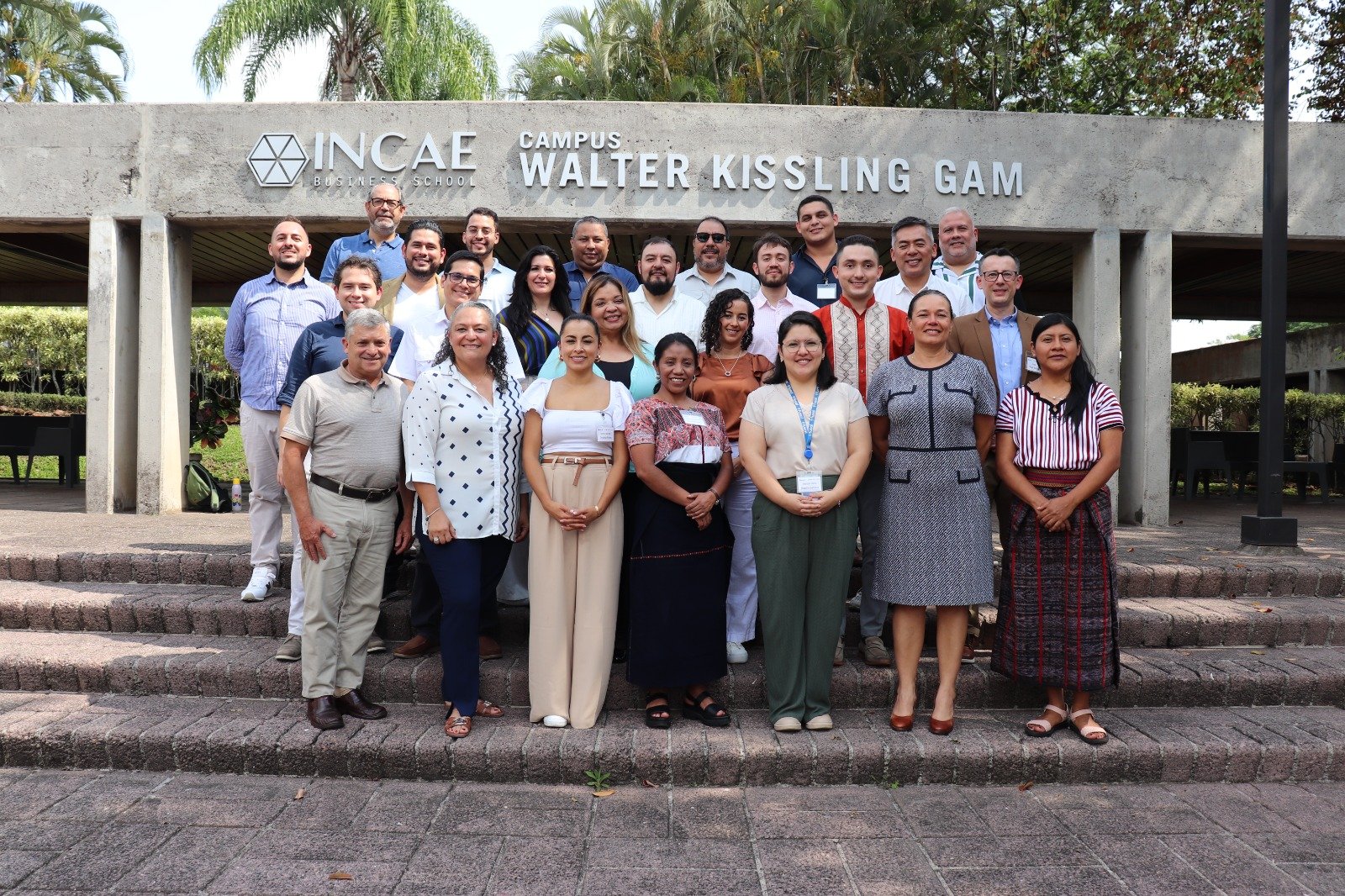
I have been teaching the policy class in the CAHI Fellows program for four years. There is always a good group; the selection process has been very successful, it is always a group with high level people with a great commitment. It is also remarkable that the group members get along well with each other.
Integrating a political analysis class into this process comes from understanding that in these countries, politics exerts great influence over all aspects of public life and can complicate a manager's life at any moment. Whether you are in the private sector or at the head of a non-profit organization, you must be able to understand the environment and be a political actor to defend your legitimate interests.
The health sector is no different. I give as an example the expression of a great friend of mine in Guatemala, who spent several years at the head of a Hospital; he told me "I am a doctor, but I spend half my time in political affairs. It is not something I like, but it is a necessity."
What do you consider to be your greatest contribution to the CAHI Fellows?
Forrest: In my classes I have tried to make a political analysis of the situation in the countries of the region. The approach I propose is very practical, so that any manager or technician has the ability to understand his environment without political color, without emotions, with the help of specific tools that allow him to identify the problem, understand the strategies that are available and study, with great caution, the consequences of each line of action.
It is usual to see cases in which leaders are ready to act, but when they take the time to make a thorough analysis, without involving emotions, they end up saying "I was ready and wanted to do this thing, but I realize now that it is not the right strategy, that it is better to go another way".
That is why I insist on the need to have an agenda. What I affirm to the participants, who are mostly high-level technicians that, if in politics you don't have an agenda, then you are on someone else's agenda. In other words, and to paraphrase the great French leader Charles de Gaulle, "you're either at the table or you're on the menu."
Is it not enough to have technical knowledge, to be experts in their areas?
Forrest: It's a pity, but politicians always have their interests and, although they talk about the homeland and are aware of the need to expand health coverage, their interests are sometimes very short term and attached to their agenda for advancement.
If a technician is not able to generate his agenda and be a political actor, then the chances of him making a real contribution and positively impacting the health of his country are lost.
This, moreover, in a context that is becoming more and more complicated. In the last four years there has been a weakening of democratic systems, in which the bipartisanship, until recently installed in most Central American countries, has given way to chaos, almost anarchy, where anything can happen.
The traditional parties have lost strength and credibility, so there is a lot of uncertainty, anarchism, the temptation of populism present, a disorder in which technical people are put aside.
From this perspective, why is a program like CAHI Fellows relevant?
Forrest: The great challenge then is to seek governance, strengthen democracy and create conditions in which technically knowledgeable, capable and committed people gain influence and are able to defend their agenda, an agenda for collective well-being and the improvement of health systems. Otherwise, they will be put aside to make way for people perhaps less prepared, but more loyal to the governor in office. This is not what we want.
The challenge we are facing is to prepare people. I believe that today more than ever it is important for every technician to make an analysis of the political reality, to be able to act in that sphere and push a well-developed agenda, so that it can improve the health systems and improve the living conditions of the population in this part of the world.