We share the experience of two CAHI Fellows with practices linked to Telemedicine, in a challenging context and that there are new alternatives for action in the health area.
The emergency generated by COVID-19 has plunged the global population into uncertainty, demanding high levels of creativity and resilience to meet a challenge for which it seems that no one was prepared.
A growing trend, in which what is being developed in the areas of health and education has been especially relevant, is the need to accelerate and deepen the digital transformation, given that virtual communication channels have become the best possibility to keep interactions between people and systems working.
Within the CAHI Fellows Network, there are several Telemedicine initiatives being implemented as a response to the challenges imposed by social distancing and quarantine measures, which stand out for their development potential and the impact they are already having on the practice of medicine.
In the following lines we will learn about two of them: the one developed by Hans Ardón in several Central American countries, and known as DrsBeeand the one implemented by Dr. Marco Antonio Ferrandino of the Day Hospital Centro Nacional de Control del Dolor y Cuidado Paliativo in Costa Rica.
DrsBee and the digital medical prescription
The DrsBee platform has existed long before COVID-19 arrived in the region, as a form of safe and effective interaction between physicians and their patients, as well as a direct line of communication for the process of prescribing and acquiring medications quickly and effectively.
In Costa Rica, for example, the system has been endorsed by the College of Physicians, which confirms the high level of confidence generated by this proposal. In the current context, the larger-scale implementation of this technological solution has facilitated the delivery of prescriptions and medications through agreements established with pharmacies.
The process is simple: the physician who has an account on the platform DrsBee platform accesses the system through a password, after which he can create the prescriptions digitally, information that reaches the patient directly through his cell phone, so that he can decide to which pharmacy to send his purchase request and coordinate the distribution of his medications.
In the context of COVID-19, the operation of the digital system and logistical coordination ensures that patients with other risk conditions are kept at home. This also reduces the incidence of people arriving for medical consultations or emergencies, at times when it is essential that hospitalization spaces are more available.
The current situation has made this type of system more necessary and the possibility of its successful implementation in processes that were already under development within the telemedicine framework more evident. In addition, the system makes it possible to identify, with constantly updated data, the interactions of the various components of the drugs, generating alerts and indicating to the health professional about these possible reactions so that he/she can find alternatives at the time of generating the prescriptions.
For the time being, DrsBee is implemented in the private sector, with a vision and plans to be adopted by the public sector, which needs to move towards a process of technological updating for its proper operation. For the time being, the largest presence of this system is in Costa Rica, with implementation plans in the short and medium term for Panama, Guatemala and El Salvador.
As Hans Ardon, CEO of DrsBee, points out: "The need for virtualized care has been evidenced today and it is something that we believe will remain in the clinical work, because we have understood that we must be prepared for contingencies such as the current one and that we can maintain the services and the relationship between the physician and his patients with the support of a digital platform".
From teleconsultation to remote patient management
Dr. Marco Antonio Ferrandino, Coordinator of the Day Hospital Centro Nacional de Control del Dolor y Cuidado Paliativo, shares his experience in another dimension of telemedicine.
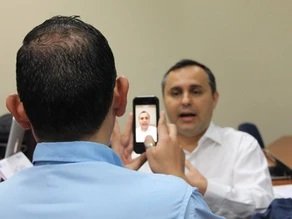
He indicates that for some years they have been performing teleconsultation and attending their patients with the support of devices such as tablets and cell phones, with a high level of effectiveness thanks to the logistical coordination that accompanies the constant exchange of information by digital means.
This equipment has undergone significant evolution and the demands of responding to COVID-19 have accelerated this process. They have now set themselves the goal of remote patient management through real-time monitoring of vital signs.
As Dr. Ferrandino points out: "Our challenge is to provide virtual care in real time to people with terminal illnesses. The most important thing is the monitoring of the patient's vital signs, on a continuous or scheduled basis, with established alerts that allow us to anticipate destabilizations or decompensations, which can be attended to without the need for the patient to be transferred to the hospital."
He also explains that the implementation has been relatively simple, through a kit of digital equipment that is sent to the patient's relatives or caregivers; when installed to monitor the patient's vital signs, the data is sent directly to the specialist or medical team in charge of the case, so that they can make an adequate follow-up.
There are many advantages to this system, such as the fact that each specialty can adapt the signs that are measured and the establishment of alerts according to the condition and the specific needs of each area. In addition, all physicians, nurses and complementary therapists have access to the same information that arrives in real time and leaves a record of the evolution that allows the generation of graphs over time.
There are also several challenges, such as the availability of equipment to attend a larger number of patients, the logistical coordination required to respond to each case based on the data generated, and the technological structure and for connecting the equipment to the digital channels for information exchange.
Having identified these challenges, telemedicine practices have come to the fore in an era of great demands on healthcare professionals.
Telemedicine is here to stay
Remote medical care through digital channels is today a necessity, as it has become an alternative to the needs imposed by COVID-19. For many experts, it is a practice that is expanding and will be established for the future.
There seem to be many advantages for citizens: speed and immediacy of care, interaction with the general practitioner and specialist from home, digital records that can be accessed by all medical professionals involved, historical record of care and medications prescribed, interconnection between all stages of the process until the medication reaches the patient's home, the possibility of monitoring a person's condition and vital signs in real time, among many others.
The challenges of this transformation of medical care are also multiple, one of them being the protection of patient data, which must always be handled with confidentiality and a maximum sense of ethics. In addition, there is also the process of adaptation of the physician, who will have to make room for a different form of care, as well as allow automated information systems to assist him in the diagnostic processes and in determining the best treatment in each case.
Although these challenges are not small, it would seem that with a long-term vision, the benefits that can be generated justify the commitment to this change towards strengthening telemedicine: in addition to the immediacy of care, this practice contributes to the purpose of achieving greater equity in access to quality medical care. It is clear that, with their implementation, these technological advances can facilitate a standardization of the levels of quality of medical care, and offer access to specialist physicians to populations in rural areas that are difficult to reach.
The trend worldwide seems to be clear: medical care appears to increase in scope and efficiency when supported by automated information systems and digital communication processes.