Interview with Prof. Luis Figueroa
Luis Figueroa is a professor, researcher and consultant in the areas of competitiveness, strategy, entrepreneurship and innovation. His work has focused on innovation and [...]
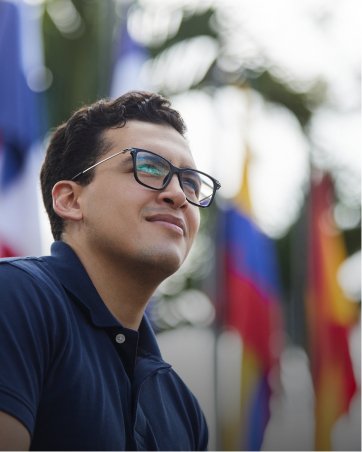
Luis Figueroa is a professor, researcher and consultant in the areas of competitiveness, strategy, entrepreneurship and innovation. His work has focused on the identification and promotion of key factors and conditions for business competitiveness in Latin American countries, through the Latin American Center for Competitiveness and Sustainable Development (CLACDS) of INCAE Business School. He is an Economist, MBA from INCAE and Ph.D. in Entrepreneurship from the Essex Business School of the University of Essex in the United Kingdom.
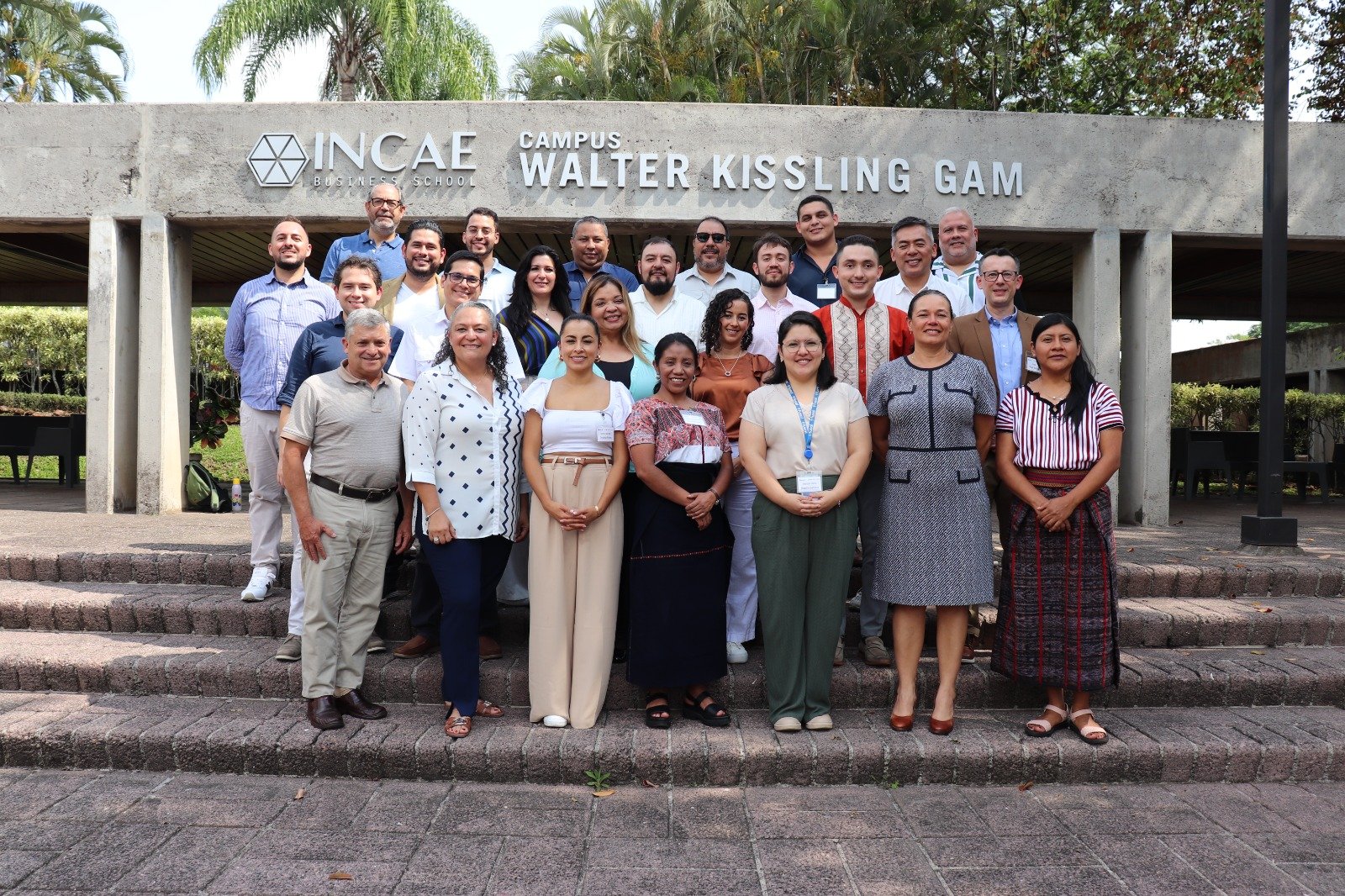
His great commitment to the CAHI Program is reflected in the fact that his presence has been significant and relevant since its inception in 2012. During the development of the first module for this second generation of CAHI Fellows, he was in charge of the Academic Direction, a responsibility that he shares with Prof.
You know all the generations of CAHI Fellows. Is there an ideal profile? What does this ideal CAHI Fellow look like?
Luis: The ideal CAHI Fellows is a person with a lot of energy, with a lot of desire to make a difference in the issue of health in Central America, to apply new concepts to perhaps old problems and to be willing to persevere and push their project to make it a reality. What we are looking for is to come out with a lot of energy, with a lot of desire, with a lot of excitement to do things and with a lot of willingness to commit 100% to the objective of these projects.
How have you seen the evolution of the CAHI Fellows within the program?
Luis: This varies a little bit depending on the condition of the CAHI Fellow at the time of entry. We have a group that is quite heterogeneous, so that transition may be different depending on the initial situation with which they arrived at the program. What we have seen is that normally the program provides them with tools, knowledge and reflections that are very complementary.
The candidates are selected from a large group, they are people with a lot of capacity, a lot of experience, a lot of achievements and leadership. Sometimes they require support in strengthening certain additional areas, and in this sense the program fulfills a very effective function by providing the tools. Depending on the initial profile, some tools are more important for some and other tools are more important for others. There are some tools that serve everyone equally, for example all the leadership and teamwork dynamics that are done, what we have noticed is that they benefit everyone regardless of the entry profile. That is what the program is designed for, so that it can be useful to a number of people who have that leadership background and desire to do things and change the situation.
Luis: How has your professional path brought you to this connection with CAHI?
I was there at the beginning, when I was designing the academic program. We have a very good team in the United States and here in Central America, together we were able to design a program that would support leadership and innovation. At that time I had a participation, then I left the program and I was in other occupations here at INCAE and now I have returned with another function.
Before I was in the Executive Direction of the program, now I am in the Academic Co-direction with Octavio Martinez since INCAE. But I never really left, because I have always participated in the programs, even when I stopped being Executive Director I gave some classes and I was always very willing to support, because I believe in the initiative, it seems to me that it is something very necessary and important.
What does a program like CAHI mean for INCAE ?
Luis: It is very important because our mission has to do with supporting the development of the countries in the region and obviously the situation of the health sector is important to address. We have great challenges in the health sector and many of these challenges have to do with management. There are technical and scientific challenges, but many of these challenges have to do with management and innovation, and INCAE has experience in this area. At this moment the health sector is a priority in the strategic actions of INCAE, understanding the importance and the need to improve this sector through innovation and management. CAHI is an important means to achieve this mission, but beyond CAHI, it is an institutional interest of INCAE to support the health sector in Central America.
As a teacher, what is the most relevant thing you offer to CAHI Fellows?
Luis: I would like to open up a little bit the perspective on business development within healthcare projects. I would like to convey the message that there is room for many initiatives in the health sector and part of innovation is that, to achieve business models that are successful for the good of all and that can even be for-profit initiatives, to bring value to people who are perhaps excluded from health services or health care. That is what I would like to do, to open up the perspective in that sense, that there is a whole world of business, application of modern management principles that can be applied to health and that is in no way exclusive. Even a public service can be viewed with the criteria of a private company in certain aspects.
Different types of health care models can coexist. It is not a question of privatizing healthcare, but of opening up the range of options. There is always a space for universal public health care, while at the same time opening up other options and, in the end, this can lead to better care. It is a matter of complementing the options so that the coverage and quality of care reaches many more people. It is a matter of opening up options, some of them for-profit, others as social and non-profit enterprises, other NGOs, others in the public sector, but all of them being more efficient in management, being more innovative. I think it is important to make the regulatory schemes more flexible while remaining effective so that other frameworks can be allowed to develop in parallel. That is what we believe, to open up the options and give room for innovation to achieve better solutions, so that health care can be provided more effectively and efficiently.
What is CAHI for you?
Luis: I would say that CAHI is a catalyst for management capacity and innovation for the health sector in Central America.
What motivates you to stay involved with CAHI?
Luis: I love this institution, I love the mission it has, I love the results. I think the CAHI Fellows are extraordinary people. This is an honor and a pleasure. Count on me always, in whatever role. I really believe in this, we are seeing the results and those results will be greater and greater. I am convinced that this effort of CAHI and INCAE will result in greater impact and better results for the region.