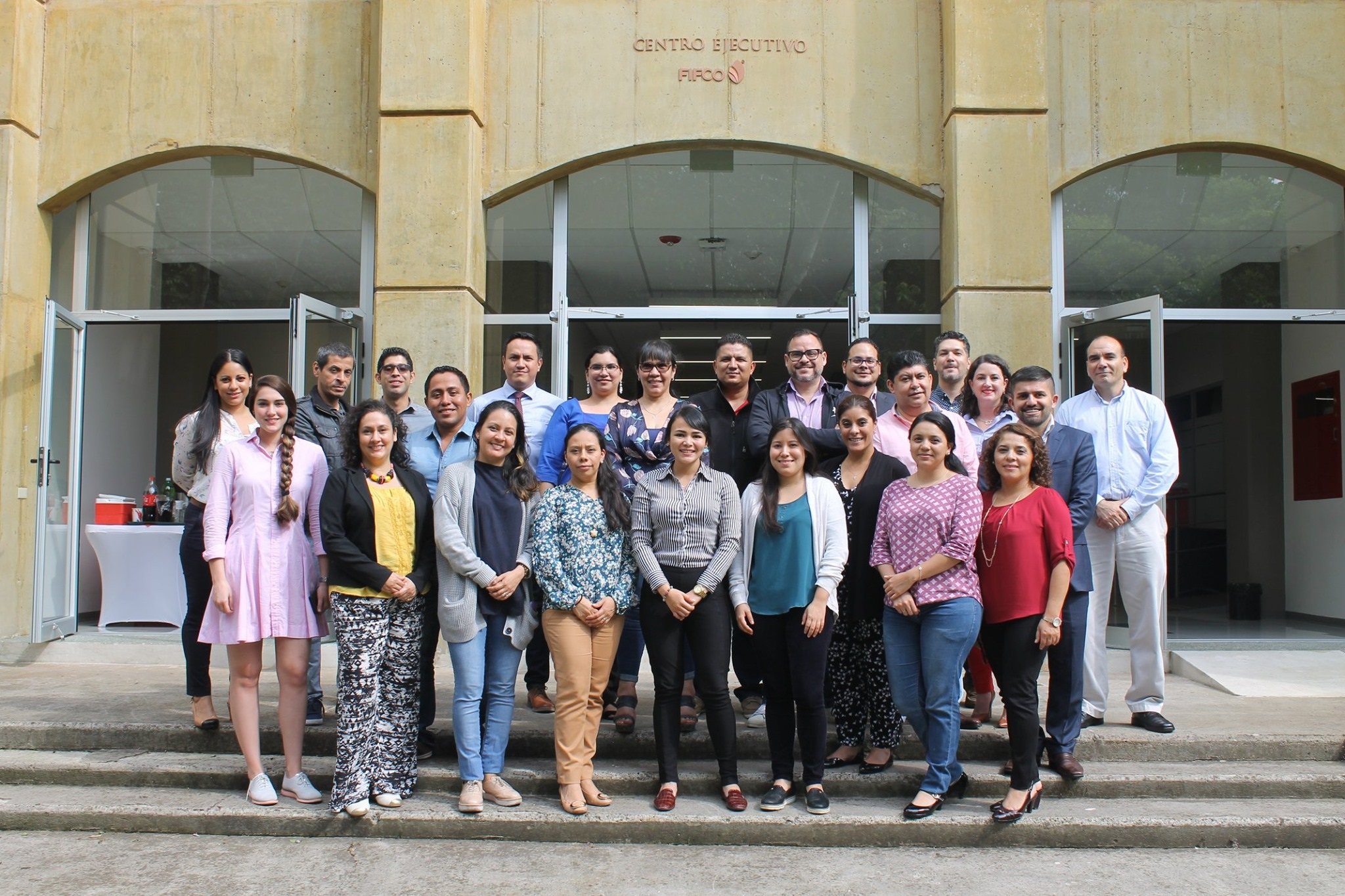
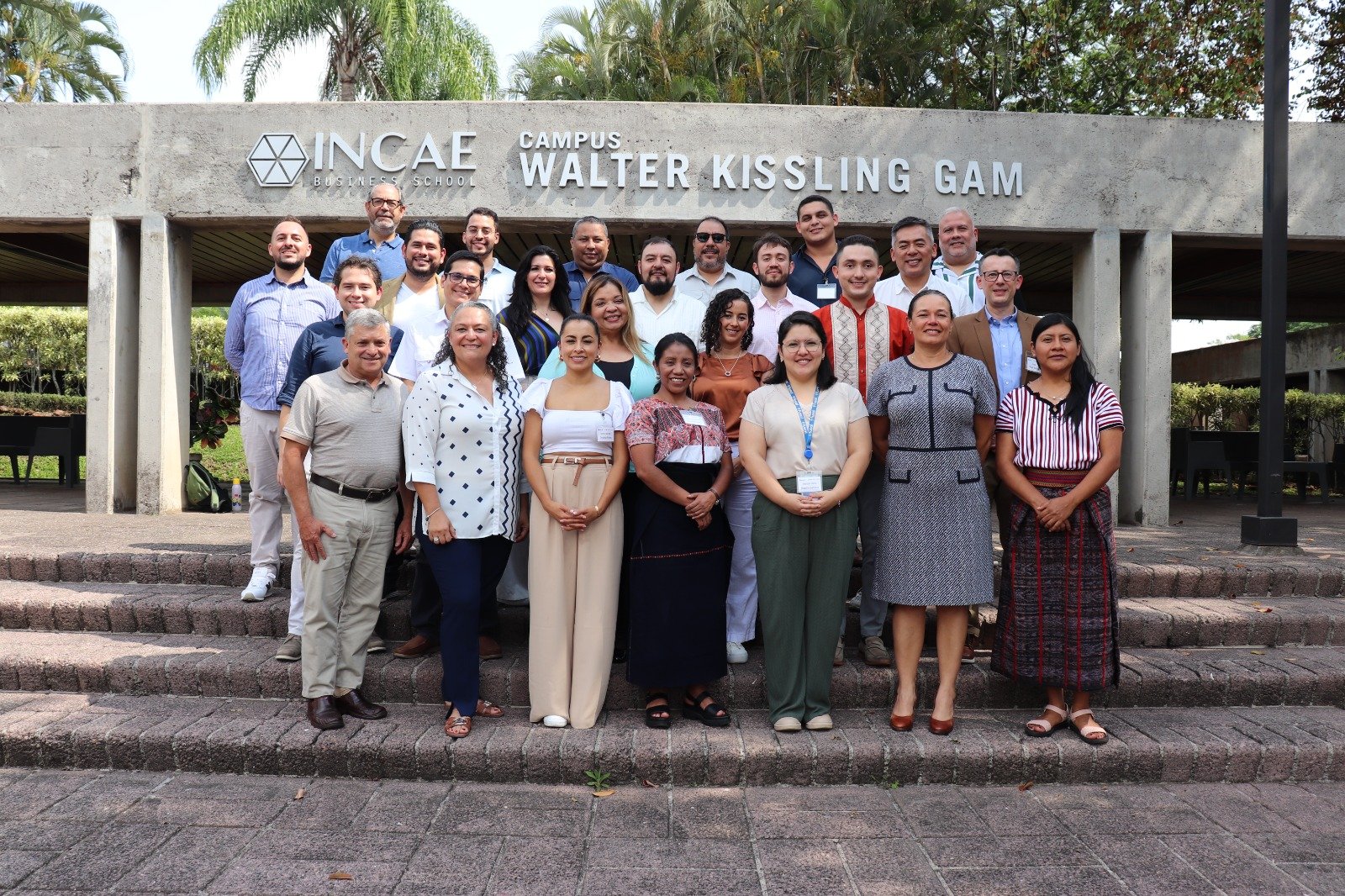
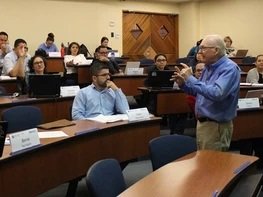
During the month of July, the Second Module of the Sixth Edition of the CAHI Fellows Program was held at INCAE Business School, Costa Rica, with an emphasis on all the elements of organizational and project management.
It is a clear perspective from which the success of organizational processes and of any project depends to a large extent on the people involved and the way they interact and communicate.
Management processes include a wide variety of aspects, ranging from financial management to the management of human teams and the exercise of leadership. That is why it is so challenging to develop management skills, considering the complexities associated with it, even more so in the field of healthcare.
In the CAHI Fellows program, through the vision and knowledge of the faculty of INCAE, important dimensions related to project management are addressed, including especially aspects associated with leadership, teamwork, strategic thinking, decision making and other aspects related to sustainability and financial management.
Andrea Prado, professor at INCAE in the areas of Organizational Change and Sustainability, puts it this way: "The emphasis has always been on management. When, at the beginning of the program, a consultation was held with leaders in the region, it highlighted the need for people to be more innovative in order to think outside the box and learn about project management. This is one of the contributions that we at INCAE make to the region. With the CAHI Fellows we have always been reinforcing management issues: how to manage work teams, develop projects, manage a budget, or how to establish strategic alliances".
This is particularly evident during the second module of the program, with an emphasis on project management. Combining the development of experiences, simulations and case studies, the group is led through experiential and reflective processes that allow them to learn about organizational change, leadership for innovation, strategic thinking in social projects, people management and coaching.
Participants are required to have a high Grade of self-knowledge, an understanding of their own dynamics and the resources they possess to handle challenging situations. Individual reflection is produced through various approaches, including the reading of classics of Universal Theater, such as some of Shakespeare's great tragedies. Through iconic characters such as Hamlet and Macbeth, a dynamic of thinking about one's own ambiguities, the ability to manage intimate impulses and make decisions in moments of ethical duality is produced.
By developing simulations for decision making and project management, we learn about the communication difficulties that can arise in a work team, the relevance of considering the ways of relating during the development of processes, as well as how difficult it can be to generate the organizational changes that are essential to innovate and increase social impact.
Prof. Del INCAE in the area of Organizational Behavior, Héctor Martínez, comments: "Performance is explained by people, by the dynamics we have in the group and by our designs. We need designs and processes that fulfill desires and visions, and facilitate people's performance. From there, it will be important to generate influential conversations that generate empathy and lead us to build better relationships. All of this will result in psychological safety, which is one of the variables related to success in teams."
Strategies and tactics for efficient project management, including action and financial planning processes, are also addressed during this module, which allows a precise combination of the aspects related to the subjectivity and emotional dynamics of those involved, with the elements more related to the planning and execution of a project.
All this offers the possibility for CAHI Fellows to have a more complete understanding of the human, material and financial processes involved in the development of their projects, as a set of elements that can be challenging for the implementation of their initiatives, or become drivers of the transformations they have envisioned and are pushing for in their contexts of influence.
These leaders are developing indispensable skills to be agents of social change and inspire others, in a process that seeks to improve access to quality health services in Central America.
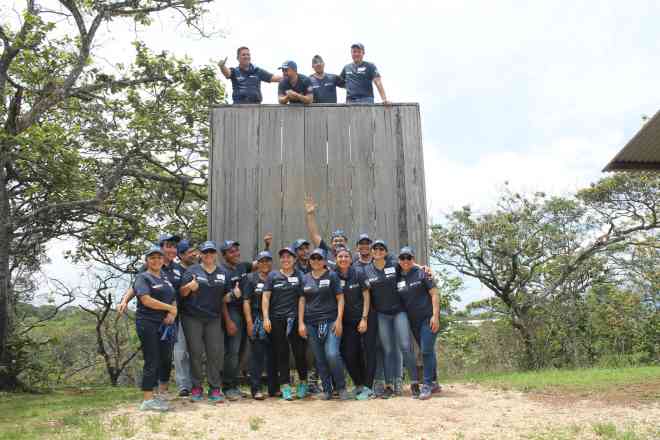
SEE ALL THE PHOTOS HERE