Interview with CAHI Executive Director: Shivaugn Ahern
Shivaugn Ahern is the current Executive Director of CAHI, a position she has assumed after having served as communications officer with an emphasis on fundraising. Her previous experience includes involvement in public policy improvement programs, promoting community participation in decision-making processes of relevance to the collective welfare.
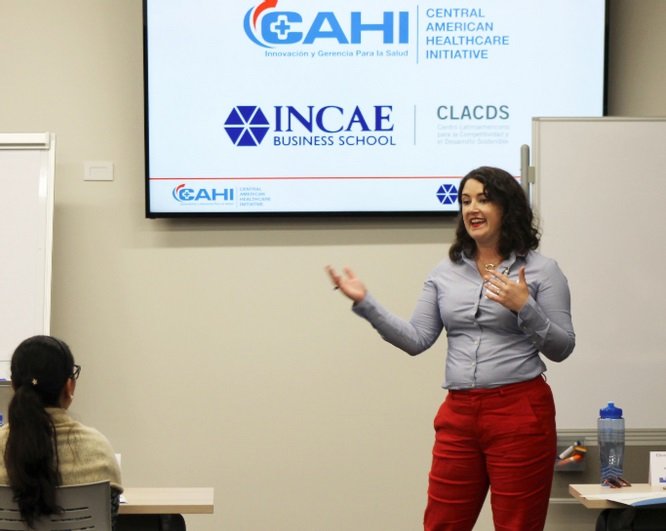
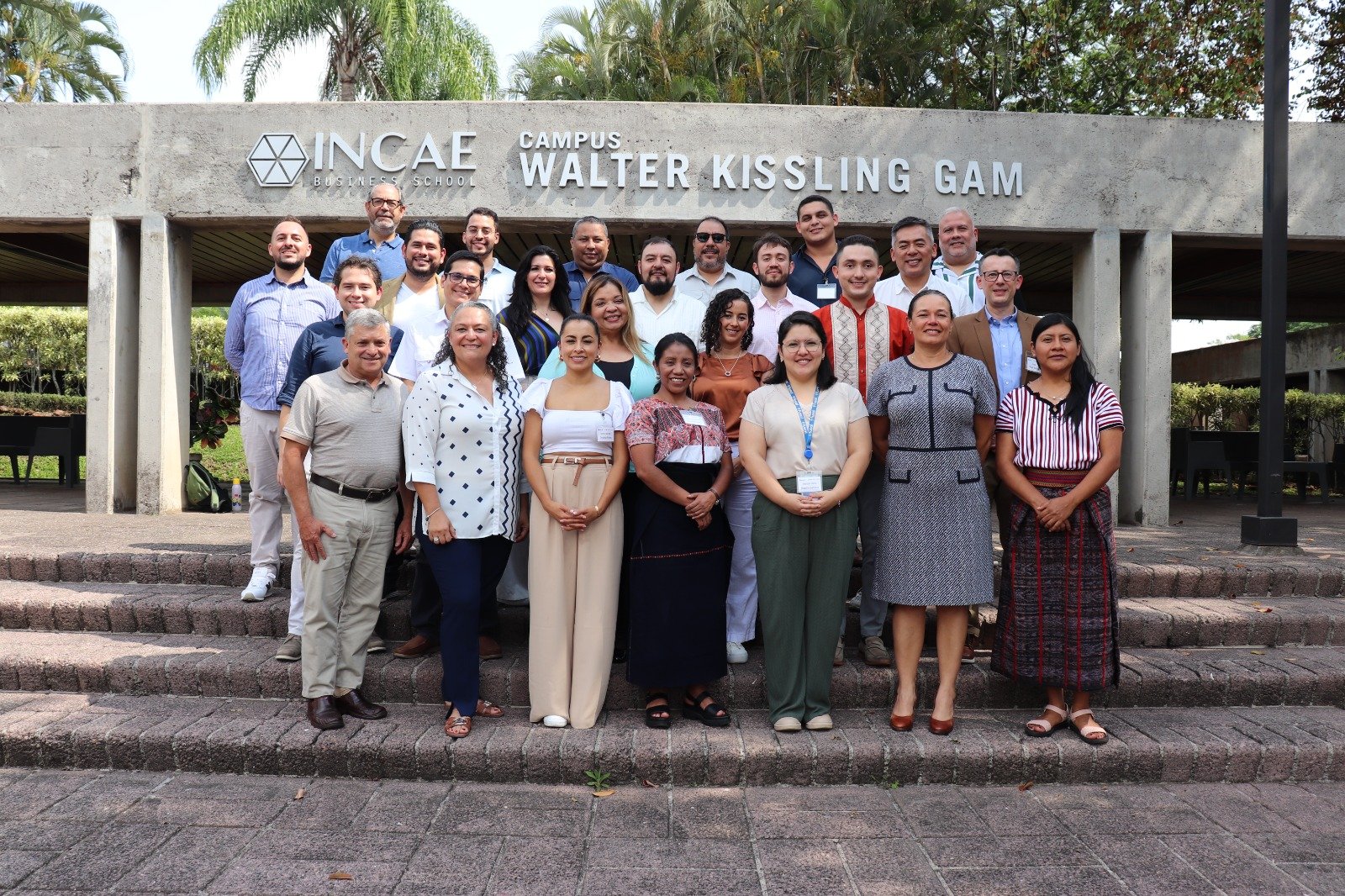
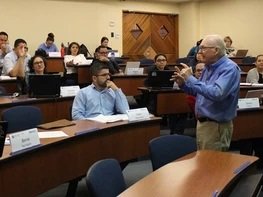
Ahern refers to having discovered many years ago his vocation for community and human welfare, which is evidenced by the commitment he shows in his work within CAHI and is clearly expressed throughout the interview that was conducted in Costa Rica, during the Second Module of the 6th generation of CAHI Fellows.
Interviewer: What led you to connect with CAHI?
Shivaugn: I am a lawyer, with a background in public policy. Although I went to law school, I never really wanted to litigate, I wanted to work with the community, to make sure that everyone is heard, to allow for the exchange of different points of view, that diverse stakeholders and interests are well represented when decisions are made.
After law school, I had the opportunity to work in a consulting firm for a number of years, doing work to encourage stakeholder engagement on a variety of issues. I was involved in a project in Australia, visiting different communities and trying to understand how certain decisions were made in their context, around the management of limited resources such as water. Those experiences in connecting with people and groups to address such relevant issues and involve them in the decision-making process forged my perspective on equity and justice in the public policy sphere.
Subsequently, about 8 years ago, I participated in a leadership executive education program offered by North Carolina State University. I was part of a cohort of 20 professional scholarship recipients, all related to agriculture, in my case as a representative of the community voice for sustainable agriculture. That was a profoundly transformative experience for me.
So when I learned about CAHI and their fellowship program, I realized that they were offering a similar leadership development experience, but in the context of healthcare, and that piqued my interest. My previous experience in leadership skills development and how meaningful that experience was to my life, deeply motivated me to work with strength and commitment in this CAHI Fellows program. I want to make sure that this opportunity is available to leaders in Central America who are working hard to improve health in their countries.
Interviewer: What is CAHI and what is its mission?
Shivaugn: CAHI - Central American Healthcare Initiative, was founded in 2012 with the mission to develop, support and promote innovation, effectiveness and efficiency in healthcare. The vision is that all people in Central America, regardless of where they live or their socioeconomic status, have access to quality healthcare.
This is a great mission that involves a lot of work, so CAHI cannot achieve it alone as a non-profit organization. Our operating model involves working in alliance with all sectors: public, private and organized civil society, as well as supporting health professionals and other related areas, to develop projects, with the vision that we are not only looking for the absence of disease, but to address the multiple factors that influence the welfare of a family, a community and a country.
CAHI's work is centered on identifying leaders who are already engaged and implementing actions and innovations to improve access to health for people and communities in their countries. We identify those leaders and bring them together in this program called CAHI Fellows.
One of the things that excites us about the program is that it breaks down the barriers between different sectors. In the same group we have people working in public hospitals, private clinics, non-profit organizations or government institutions, all with a focus on improving access to healthcare.
After five years of operation we have a network of more than 100 leaders working in Central America, cooperating with each other to improve health services, prevent disease and bring quality of life to the communities they are working with.
Interviewer: What differentiates CAHI from other similar programs?
Shivaugn: There are other programs that connect professionals and provide training to develop their leadership skills, especially in the business area. However, what makes our program unique is that we bring in leaders who are developing a specific project with the goal of impacting social welfare and health improvement. CAHI Fellows' projects are tangible, something that is within their sphere of control, within which they have identified a problem they want to solve.
Within the program they establish relationships, become friends, some even verbalize feeling like a family, and with those bonds developing better management skills and implementing their projects.
CAHI Fellows is not only a network of leaders, it is a network of individuals who are generating real change, who are agents of social change in Central America and in the field of health.
Interviewer: What is CAHI's relationship to Agenda 2030 and the Sustainable Development Goals?
Shivaugn: The most obvious connection is in the work we do for health and wellness, which corresponds to the third objective. We are committed to achieving improvements in health and that is the reason that motivates us to move forward.
Our vision is also to collaborate with the reduction of inequalities, which is related to objective number ten. Our efforts are focused on increasing access to quality health services for all people in Central America, so our work is guided by the values of equity and solidarity, which we share with all our partners in the region. If we succeed in advancing greater equity in health, we know that this will also have an effect on other aspects of social equity.
Finally, we are part of the efforts made to generate alliances in favor of achieving the Sustainable Development Goals. This is in the way we work, it is our DNA.
Interviewer: What do you think makes CAHI a social innovation?
Shivaugn: When we hear the word innovation, the first thing we think of is technology, but innovation can take many forms: innovation in public policies, in processes, in the type of organizations we form.
Social innovation is currently a very attractive notion, we are all talking about it. We refer to innovations in all areas, but the distinctive element is the purpose of generating collective well-being.
A social innovation can take the form of a non-profit organization, a for-profit venture, an initiative within public institutions, or changes in government policies. The differentiating element is the focus on the common good.
Each of the CAHI Fellows qualifies as a social innovator because they are developing ideas and actions to generate social welfare. Some are entrepreneurs, others are part of NGOs, others are driving changes in the public sector making it stronger and more efficient, but all are social innovators. Even we at CAHI are social innovators.
I feel this is an ideal place to be, because this is the future, this is how society and business will continue to function, with a greater focus on the social welfare that we are generating. Consumers are demanding it, but it is also an ethical imperative.
Interviewer: What is the impact of CAHI in the Region?
Shivaugn: In CAHI we do not have a centralized agenda nor do we decide what changes are needed in the area of health, because that changes according to each context. What we are doing is to encourage each leader who becomes a CAHI Fellow to identify him or herself, within his or her environment of influence, community or country. They are the ones who are setting the agenda for the necessary changes in the area of health in each context. That is why we have a wide variety of initiatives and projects.
CAHI Fellows have reported that their personal and professional growth has been positively impacted by their participation in the Program. Many of them have reached positions of greater influence, as well as gained autonomy through their ventures.
When we think about impact with a broad vision, we can see that CAHI's reputation has been growing and that more people in Central American countries recognize the relevance of the work we are doing. Organizations, public institutions and leaders from all sectors express their interest in partnering with CAHI, participating in the program, so that they can improve their operations and the results they get from it.
Our CAHI Fellows are reaching positions of influence by implementing what they learned during the program and in the development of their projects. Over the years, they are able to implement their findings, learning and tools in new contexts, which generates a positive impact on their environments. In addition, they are experiencing an improvement in management processes, with more committed and efficient teams in the operation of the institutions.
The vision I have today for the future is to generate a significant critical mass. In about 20 years, with more than 20 generations of CAHI Fellows, we will be generating a movement of committed and high-level leadership, with operation of important projects and efficient administration of public funds, a large number of alliances around the CAHI Fellows Network, to achieve significant improvements in the health system and with a relevant impact on the quality of life of the population.
Interviewer: What is the immediate future of CAHI?
Shivaugn: This is what we call CAHI 2.0. In the next 5 years of operation we are going to continue with the CAHI Fellows Program, to train between 18 and 24 people each year. In addition, we will continue with our Annual Conference, which we usually do in February, to bring together leaders and people interested in continuing to learn about health management in the region, including sharing learning with the CAHI Fellows Network. Next year (2020) the Conference will be held in Guatemala.
Our main emphasis for this new phase is to support the CAHI Fellows Network in each country in a more strategic way. In the remainder of this year (2019) we will be launching CAHI Fellows committees in each country, using our platform to help organize them and identify the most critical needs from their perspectives, for the development of new collaborative projects that achieve the maximum possible impact.
Interviewer: What is CAHI looking for in a leader?
Shivaugn: We have more and more clarity on this, there are already 120 leaders who are part of our program.
We are looking for people who have a deep connection to the community work they are doing, a true commitment to the institution in which they work, to their country and their fellow citizens, to the territory they occupy. We want people with a strong conviction to make improvements in the health system in the immediate future.
In addition, we select leaders with clear projects, with a defined target population. It is important that they are clear about the problem they are trying to solve, about their target audience. They must be able to explain it clearly, because we evaluate both the person and the project.
Thirdly, and I must say that this is perhaps the mysterious element, we strive to differentiate those people who just want to add one more academic merit or degree, from those who have a real commitment as agents of social change, those who want to use the tools they will learn in the program to bring about change in the world.
In short, we are looking for people with a vocation to serve others, who are willing to step out of their comfort zone to achieve this. This is what we have today, a network of people who share these values, this commitment and the willingness to go beyond their own interests to cooperate with the collective welfare.