CAHI Fellows Program
Interview with Prof. Alcira Castillo
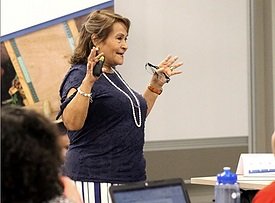
Alcira Castillo has extensive knowledge on social determinants of health, equity and health promotion, having served as coordinator and tutor in virtual and face-to-face courses of PAHO/WHO and COLAM/OUI for many years.
She has a career as a teacher and researcher at the School of Medicine, School of Public Health, at the University of Costa Rica, where she served as Director for 6 years. Visiting Professor at the Medical Sciences Campus in the Doctorate of Public Health at the University of Puerto Rico. International consultant.
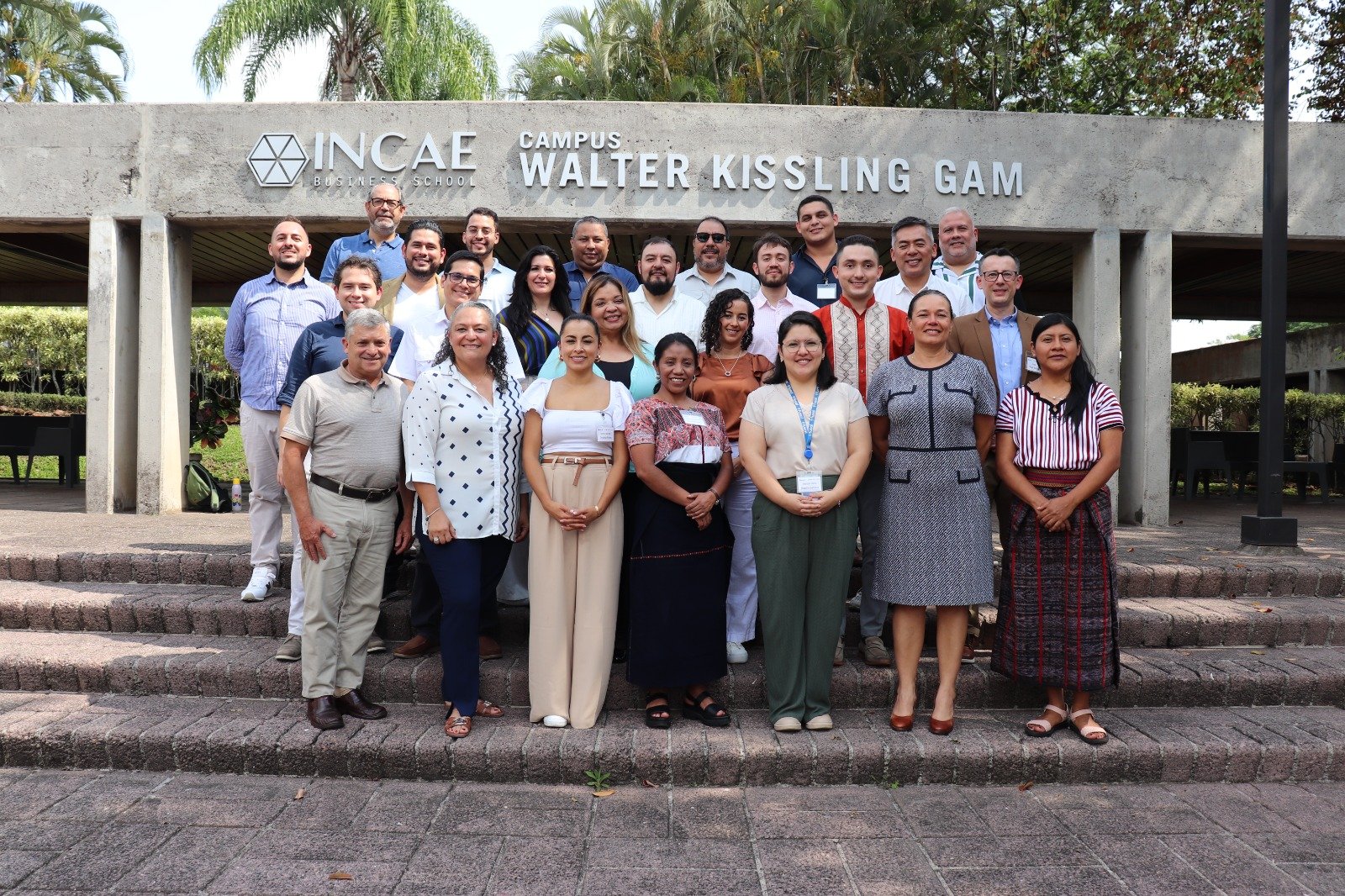
We approached Professor Alcira Castillo a few minutes after finishing her class for the CAHI Fellows cohort and this was the interview we conducted with her:
How do you feel after this class with a new group of CAHI Fellows?
Alcira: I love working with new groups, because they are just starting this process and they are always very professional in their approach to their ideas and projects. I perceive that they are well selected, that they come with a lot of commitment, motivation and desire to learn. As a teacher, you perceive all these qualities and that motivates you to teach. Besides, this is a subject that I am very passionate about. I was at the University of Costa Rica for 30 years, but here at INCAE within the CAHI program I feel at home again, it is all very pleasant and welcoming.
How do you connect your professional journey with the contribution you are making today to the CAHI Fellows program?
Alcira: I would say that being in teaching for most of my life, and in the direction of a public health institution for 7 years, has marked me a lot in terms of the responsibility of training human resources, especially in this field of public health. In working with the social determinants of health, it is necessary to have people with critical thinking in Central America, because there is much to do, we must begin to break patterns, to innovate, and for this it is ideal to start with these projects, which are small interventions with the capacity to break and open paths.
What is your perspective of CAHI's strategy in strengthening healthcare leaders?
Alcira: I have learned a lot from this methodology, which I think is very good. Through my experience in CAHI I have learned a lot about the management methodologies of their projects and about the ways in which the groups interact to support each other and exchange knowledge. I feel it is very important in this work.
I also feel that one of the most significant aspects of this way of working is that the fact of having an idea or a project under development is a crucial element for participants to make a synthesis of all the knowledge they acquire in this process of application in real situations. Additionally, the combination of face-to-face and virtual is very favorable and motivating for the groups. Finally, I would say that the exchange between people from different countries enriches them a lot.
Being a teacher in this program and having trained so many CAHI Fellows leaders, what do you feel you have brought to the groups?
Alcira: I believe that I strive for them to have a critical vision of their own reality, that they try to go deeper into the situation they know in the field where they are. There must be foundations, with statistical analysis, ethics, that they have solid and comprehensive knowledge. It requires a lot of critical thinking, speed.
What is your vision for the future of CAHI?
Alcira: I believe that the CAHI Program must continue to grow and sustain itself, because we need many leaders of this level in Central America.