Transforming the region's future with more women in higher education
Higher or advanced education is essential for the social progress and competitiveness of countries, impacting not only on economic growth, but also promoting more equitable societies.
Higher or advanced education is essential for the social progress and competitiveness of countries, impacting not only economic growth, but also promoting more equitable and sustainable societies. In this sense, it is critical to address the importance of women's access to higher education, given its influence not only on gender equality but also on a nation's capacity for innovation and growth. However, the current situation in the region, as reflected in the data of the Social Progress Index (SPI) and its Advanced Education component, shows a diverse and challenging panorama.
Current Situation
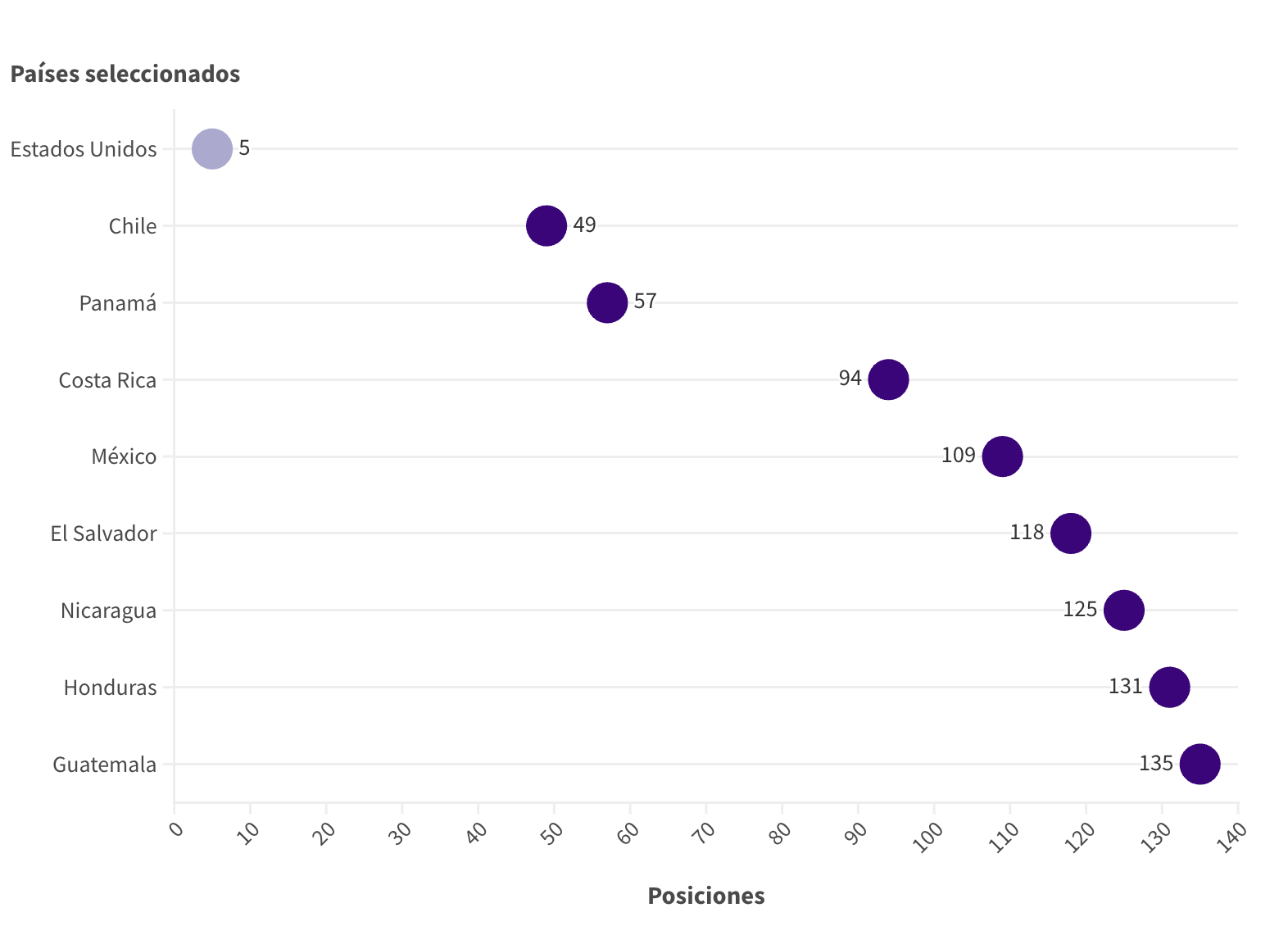
The IPS, which considers 170 countries, uses an indicator called "Women with advanced education" that evaluates the proportion of women (adjusted for age) with 12-18 years of education. In this indicator our countries are in the following positions globally: Costa Rica at 94th, El Salvador at 118th, Panama at 57th, Guatemala at 135th, Honduras at 131st, Nicaragua at 125th; taking as a reference Mexico at 109th, and the best in Latin America which is Chile positioned at 49th, it can be seen that in general the region is lagging behind. In contrast, our main trading partner, the United States, is in position 5, setting a benchmark in terms of educational inclusion of women (see Figure 1).
Challenges and Opportunities
The lag shown in the data is the result of the multiple challenges faced by our countries in their efforts to improve access to and quality of higher education for women. Among these challenges are cultural and social barriers, marked by gender stereotypes that restrict women's educational and professional aspirations, especially in science, technology, engineering and mathematics (STEM) areas. In addition, inadequate educational infrastructure and concerns about safety en route to educational institutions represent additional challenges that discourage women's active participation in tertiary education.
Figure 1. Women with advanced education (position among 170 countries). Source: Social Progress Imperative.
Beyond a women's issue
Women with higher education are fundamental pillars for both the progress of countries and the well-being of families. At the national level, they contribute significantly to economic development, innovation and competitiveness, boosting labor productivity and promoting sustainable economic growth that contributes to poverty reduction.
At the family level, women's advanced education brings profound benefits, including improvements in their children's health and education, and strengthening their empowerment and autonomy. This empowerment allows women to make more informed decisions about their lives and work, establishing a positive cycle of education and well-being that benefits future generations, a predictor of children's education is the mother's level of education, so there are also trans-generational benefits.
Strategies for the future
Looking to the future, it is essential to recognize that women with advanced education represent a force for economic growth, as their participation in the labor market can significantly boost the productivity and competitiveness of countries. Thus, efforts to expand access and improve the quality of higher education for women in Latin America represent a strategic investment for the economic and social future of the region. Therefore, it is imperative for the countries of the region to intensify efforts to overcome existing obstacles and pave the way towards a society with more women in higher education.
To do so, this challenge must be addressed in two ways: as a national priority and as a collective commitment. Thus, it is necessary for governments, educational institutions, businesses and civil society to work together to overcome these challenges. If these synergies are achieved, then targeted policies can be applied, greater investments in education can be made, new educational models can be implemented, more technological solutions can be incorporated, and a culture can be promoted that fosters an environment of opportunities where women can reach their full potential. In other words, it is transforming our present for a more prosperous future through education.