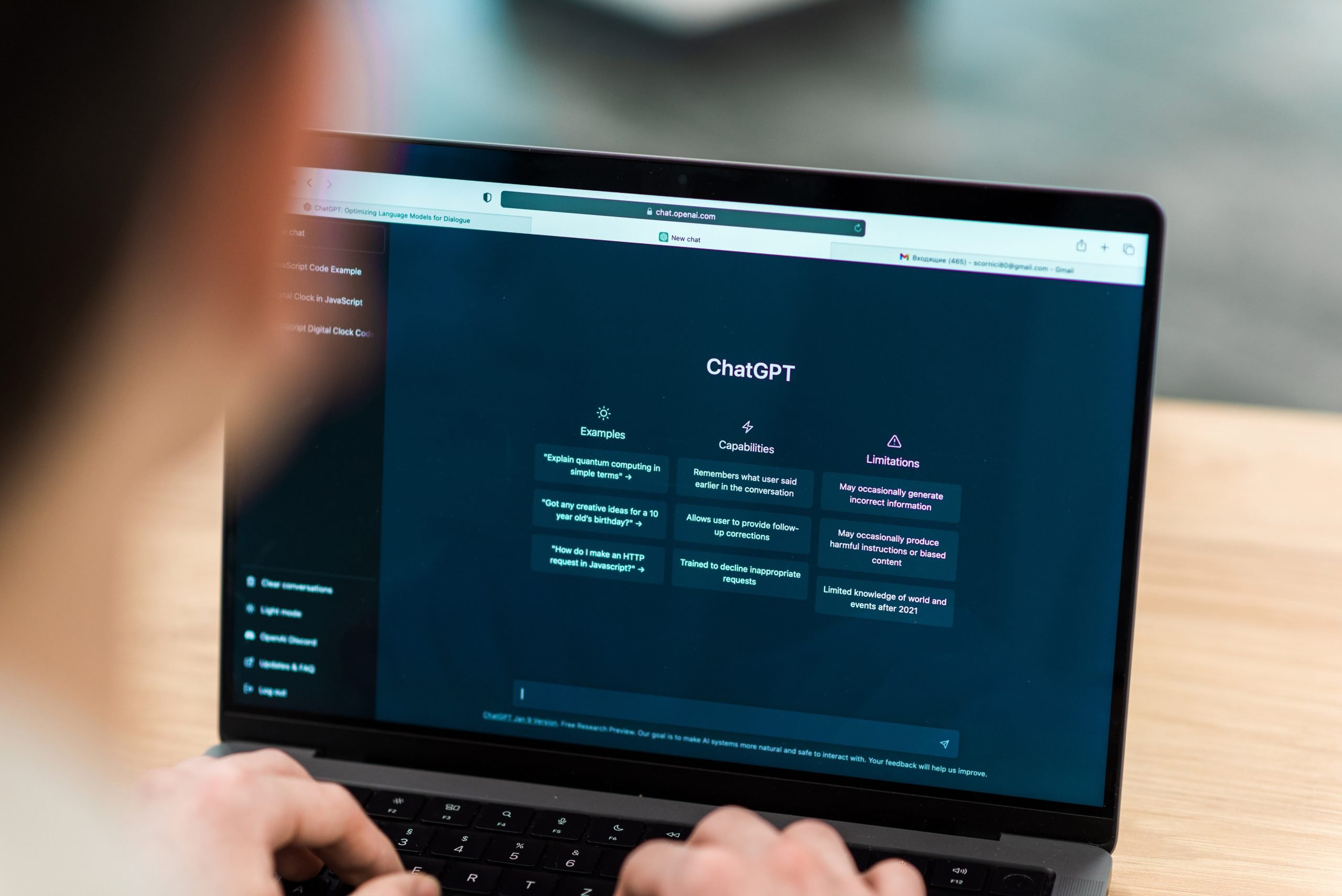
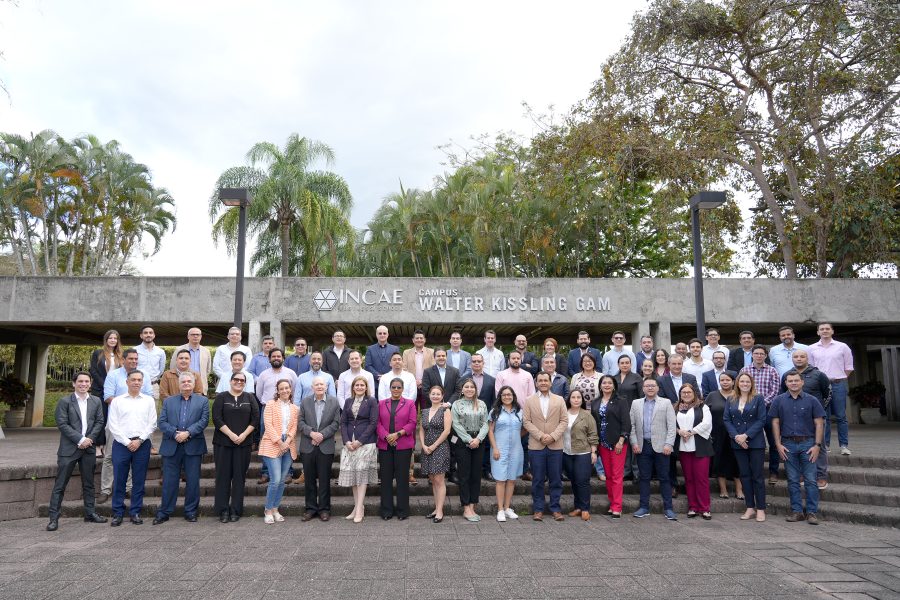
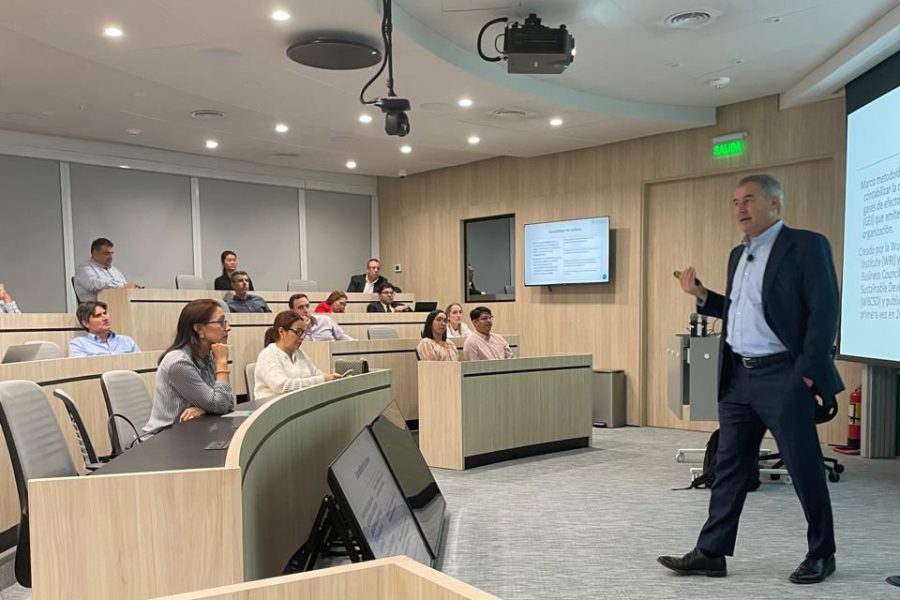
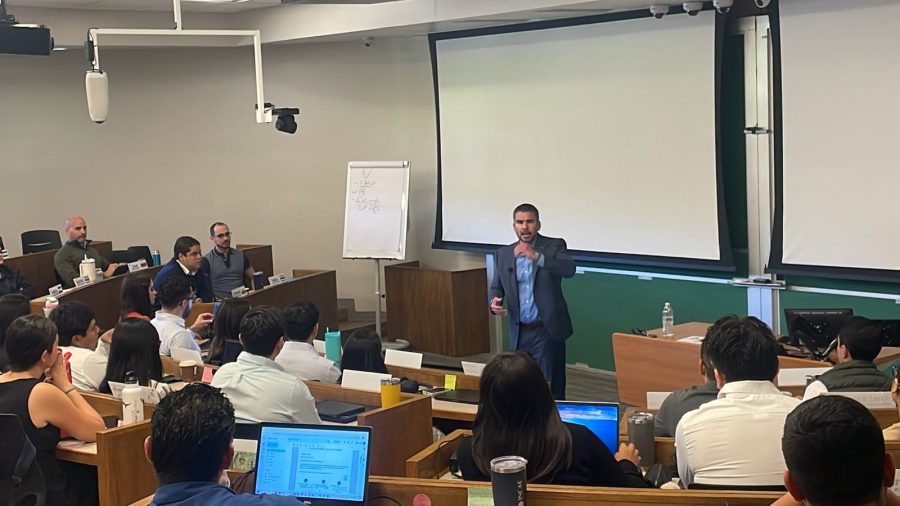
The recent publication (1) by Juan Carlos Barahona, Ph.D.(2), and Diego Murillo-Esquivel, M.Sc. (3), pioneers the underexplored intersection of artificial intelligence (AI) and business education. This exploratory study delves into the benefits and challenges of integrating ChatGPT into the framework of a student-centered business school.
This school, at the forefront of a pedagogical revolution, is exploring the potential of AI tools such as ChatGPT to complement its case-based learning model. The proposal is to augment (4) learning experiences and stimulate possible innovations in pedagogical design and student accountability. In this way, the role of the teacher evolves towards a more facilitative stance, taking advantage of the new capabilities offered by AI integration.
In their experiment, the authors incorporated ChatGPT into three digital transformation courses to measure the tool's impact on student engagement and critical thinking development. The authors found increased student interest in AI and confirmed that this interest was sustained despite fears about the impact of the AI tool on their grades and professional growth.
The experiment yielded varying results across student cohorts, with some demonstrating greater mastery and acceptance than others. These observations underscore the critical role of educators in fostering a learner-centered approach to learning and the agile prompt engineering skills (5) that are essential to harnessing the full potential of AI tools. An additional challenge they find is that the inclusion of AI can increase, rather than decrease, teacher and student effort, not only intellectually but also in terms of dedication.
The study revolves around two crucial areas: student engagement and critical thinking. It delves into the potential impact of AI assistants, such as ChatGPT, on teacher-student dynamics and classroom cohesion. On the other hand, it also contemplates how these tools can humanize the teaching experience and improve student engagement, if integrated wisely.
From their observations, the authors introduce the concept of a new "pedagogical contract". This model promotes co-learning between students and teachers, encourages experimentation and compassionate collaboration, and accentuates the value of the case method. The paper culminates with seven key findings that chart the roadmap for future educational practices amidst a rapidly evolving AI landscape:
- Inevitability: universities must rethink how humans and machines interact and integrate AI into existing mediation methods and business models.
- The teacher's role as a facilitator of individual learning: intelligence involves both creative and critical conjecture. Teachers must become architects of personalized learning experiences.
- Technology literacy and student awareness: To promote effective use of technology, AI and expert judgment should be taught together in tasks that encourage creative problem solving. Education should emphasize collaboration, experimentation and critical thinking through a new pedagogical approach.
- There is an opportunity for use in student and teacher assignments and preparation: it should be considered appropriate and desirable to use ChatGPT for student and teacher class preparation. Everyone should act on the assumption that everyone else is using it.
- The role of critical thinking is crucial: AI is but an assistant to human judgment, and students should not take its results as absolute truths.
- Digital mindset of teachers: educators must provide students with tools and tasks that place them in a more central role in their learning process and, at the same time, encourage them to find real scenarios to put what they have learned into practice in their work.
- Teacher incentives and evaluation issues: AI tools in education require investment and experimentation to prioritize the development of creative and collaborative human beings. School administrators should review the impact on current business models.
The article is thought-provoking, initiating a discourse on the synergistic merger of AI and business education, and invites educators and managers to embrace the transformative potential of AI tools like ChatGPT, catalyzing the development of the next wave of critical thinkers who will shape the future of business.
_________________________
1 Titled "'Talk to it like a machine if you want it to talk back to you like a human': first impressions of using ChatGPT in master's courses," currently in preprint.
2 Professor of Innovation and Technology Management at INCAE Business School
3 Digital Transformation Instructor and guest researcher at INCAE Business School.
4 A term they use explicitly indicating its use in a technological context, where it takes on a meaning more akin to "improving" or "enhancing" or "increasing" a person's technological capabilities.
5 A term they keep in English for lack of a better translation, but which can be understood as "instruction engineering".
Image by frimufilms from freepik.