The study "Really That Sustainable? Exploring Costa Ricans' Green Product Involvement" conducted by Dr. Francisco Conejo, Associate Professor of Marketing at the University of Costa Rica, and co-authors Wilson Rojas and Wilson Rojas. Exploring Costa Ricans' Green Product Involvement" by Dr. Francisco Conejo, Associate Professor of Marketing at INCAE, along with co-authors Wilson Rojas, Ana Zamora, and Clifford Young, was recently published in the Journal of Macromarketing. This internationally A-ranked academic journal covers, among others, topics related to marketing, society, and the environment.
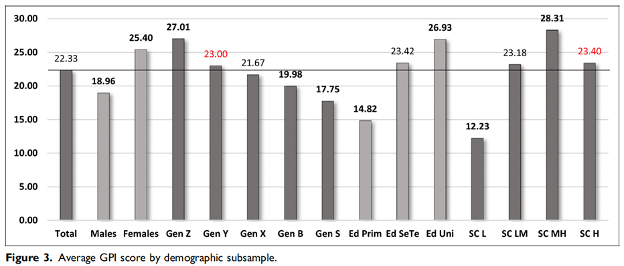
The study used a large sample, N=1,036, representative of the country's adult population. Among the results obtained, it was found that the consumers who are most interested in green products are women, Generation Z, with a university education, and of medium-high socioeconomic level.
One of the most surprising results is that interest in green products among Millennials and the upper class is only average. It is worth noting that overall interest at the national level was also surprisingly low, at just 44%.
Costa Rica has come to enjoy an international reputation for sustainability. That image is widely exploited by government and business narratives. However, green products, and by extension sustainable consumption, are of little interest to Costa Ricans. Behind the idyllic image projected by the country lies a less flattering reality.
On the one hand, there is the excessive use of resources, reflected by the consumption footprint of Costa Ricans. According to the Global Footprint Network, already by 2018 Costa Rica required 1.55 planets Earth to maintain its lifestyle. Although better than the staggering 5.13 planets required by the United States, Costa Rica's ecological deficit is similar to that of Central America (1.45 planets), Latin America/Caribbean (1.56), and the world (1.75).
For a country that boasts of being an example of sustainability, its ecological footprint is nothing special. It is also worrisome that Costa Rica's ecological deficit has been worsening for nearly half a century, with little being done about it. Rather, Costa Rica is increasingly becoming a consumer society, with dire implications for society and the environment.
On the other hand, there is the garbage that the country's excessive consumption generates. Illustrative of this is the amount of plastic that Costa Ricans consume and then discard. The country generates about 550 tons of plastic waste daily. Only 9% is recycled and 11% is sent to official dumps. The remaining 80%, 440 tons daily, is dumped in streets, lots, and streams, much of which eventually ends up in the oceans (Grajales 2018).
Instead of being sustainable, Costa Rica has one of the most polluted watersheds in Central America, the Tárcoles. In addition to plastics, the river evacuates all kinds of garbage from the Greater Metropolitan Area, where most people and industries reside. From bottles to tires, the river conveniently carries everything.

The excessive consumption of tico is problematic, both because of the resources it requires and the waste it generates. This prevents the country from being truly sustainable.
As Dr. Conejo points out, "National parks alone do not make a country sustainable. It is the people of the country, through their daily attitudes and behaviors, that truly make a country sustainable. Unfortunately, Costa Ricans' disinterest in responsible consumption not only undermines the country's ecological achievements. From a country-brand perspective, the incongruence between the idyllic image Costa Rica projects and the unsustainable behavior of its consumers is undermining the country's credibility and attractiveness. The above is worrisome since tourism, one of our most important industries, depends heavily on this idealized image."
The study concludes that the level and mode of consumption of Costa Ricans is the most serious environmental threat facing Costa Rica. It is urgent to devise, but above all to implement, truly sustainable development models. One that decouples economic growth from unbridled consumption and socio-environmental degradation. The study concludes with several recommendations in this regard.
Although its implementation remains the biggest challenge. Especially for a country like Costa Rica, given its limited resources and high vulnerability to vested interests, both domestic and foreign.
For more information on the findings of this research you can visit the study's publication HERE.
For more information on this topic, please contact trinidad.alvarez@incae.edu.