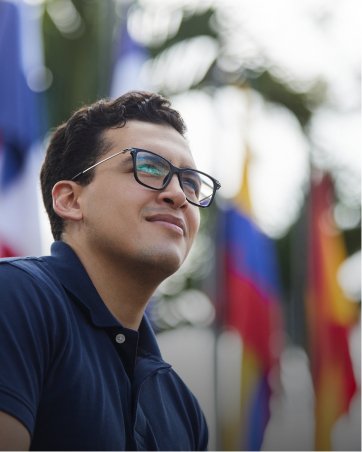
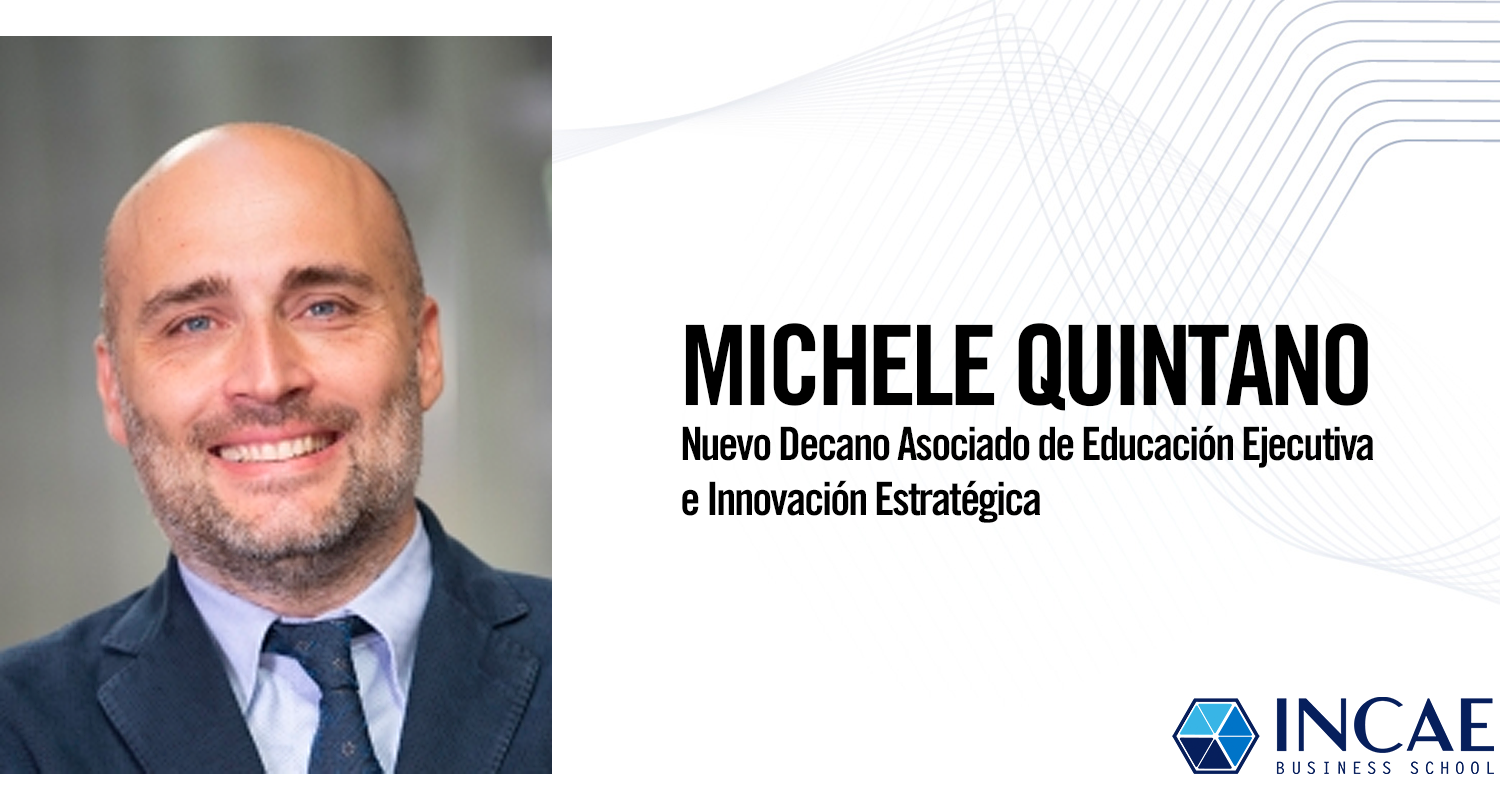
By: Juan José Cruz. He has shared his experience in distinguished universities at international level. In his hands he has had projects of great importance. In addition, she has extensive experience in marketing and enjoys soccer and movies. However, Michele Quintano's greatest challenge has just begun: to enter into a new educational culture to train the managers who seek to conquer tomorrow.
His work as a researcher dates back to the 1990s at the Università di Napoli Parthenope (Italy). There he has been able to teach for more than 14 years and even reached the Grade of Head of Studies in Management degrees. In two years in this position, he had contact with more than 5,000 students who, in addition, received very important knowledge.
Madrid is one of the cities that has most marked his life. Quintano defines his stay there as the beginning of a process of internationalization. The market and its competitors were absolutely different from what he had known before, but everything he saw helped him understand the business and entrepreneurial world. "Being there was one of the best decisions of my life," he says proudly.
His experience in marketing has allowed him to favor the academic development of other people who, like him, dream of contributing to the world of education. Among his achievements he can boast the development of several programs, such as the Executive MBA at ESADE Business School (Spain), and the Master in Marketing and Sales Management, belonging to the same institution. This allowed him to mix three of his greatest interests: business administration and management, marketing, and education.
Why INCAE?
INCAE Business School's relationship with ESADE was one of the main drivers that attracted him to this institution. At first, joining INCAE seemed like a titanic task, not only in terms of work, but also personally. However, the professional leap and the desire to do something different finally convinced him. Although he spent most of his life in Europe (mainly in Italy and Spain), he does not miss many things from those territories. "An atypical Italian", he defines himself.
Quintano already had extensive experience in educational organizations, but INCAE presented itself as an opportunity to "start over". Yes, it was a new country, a new institution, and with new people, but the desire to contribute to the education of other students remained the same. So he accepted the challenge of entering unfamiliar territory and not only sharing his knowledge, but also adding to it.
"I have been very happy for weeks with the choice made, to see how I can contribute my bit. It is a pleasure, an honor, but also an important personal challenge from a personal and professional point of view. It is not just anything to enter this fantastic institution that is INCAE, and to work hand in hand with the whole team to do things well. There are some fantastic profiles and people," said Quintano.
Its biggest challenge, so far, has been to detach itself from the knowledge that is applied in other parts of the world, such as Europe, for example. The Central American region is unique and requires its students to learn based on the environment around them, but also with a view to growing and expanding worldwide. These particular characteristics of the region have motivated Quintano to discover and learn something new every day. He says that age is no impediment to learning relevant facts about the culture and countries where he will now have an impact.
The heritage and legacy of INCAE are also two aspects driving Michele Quintano's plans at the institution. The new Associate Dean of Executive Education and Strategic Innovation says he has detected very particular interests in the new generations. There is a passion for change, for generating social impact and taking Central America to the big leagues.
The challenge is to exploit those interests and blend it with the characteristics that have defined the institution for years: programs focused on sustainability, diversity, and inclusion in every sense. On this last point, Quintano has a wealth of knowledge. During her years in Spain, she helped create a program for women at ESADE, and each year, more than 150 female executives enroll in it.
"One of the key things I've seen in schools that want to contribute something, beyond being successful in the industry, is diversity and inclusion. There are many activities that can be done in this regard. You have to plan for the integration of new profiles that we are used to seeing. I am a great believer in the help and social impact that a school can have through the programs and messages it gives in the classroom," he added.
But not even all the experience makes it easier to train new managers. The world and its interests have changed radically in recent years, and continue to do so (albeit at a slower pace) day by day. Today's business managers require a new vision, a different way of dealing with the topics that society demands. Thus, there is a need to train different leaders in each generation.
Tomorrow's executives
For Quintano, the new executives he will help to train must be resilient and understand that change happens every day and in unexpected ways. They must also have the ability to resolve crises and venture into major decisions. He points out that something as simple as a SWOT can be the difference between a company's ruin or its rebirth.
Finally, he also states that management training for the future must focus on understanding and taking advantage of all available human resources. The clash of all the generations living together in an organization can be difficult to manage.
"One role of business schools is to prepare students to fit the generations together. Both younger and older students can experience it as a conflict. They are completely different points of view, starting and finishing points. You have to find a way for each to understand the other and to take advantage of the differences. It's all about adaptation and different interpretations of reality," he concluded.
Quintano knows that the future of education in Central America is promising. Young people and entrepreneurs in the region have shown him that there is a real concern for the development of the area and that it is no longer enough to remain with the knowledge acquired during the academic stage. For this reason, he believes that lifelong learning and relationships with other people full of experience are some of the paths that must be followed if one wants to always be one step ahead.
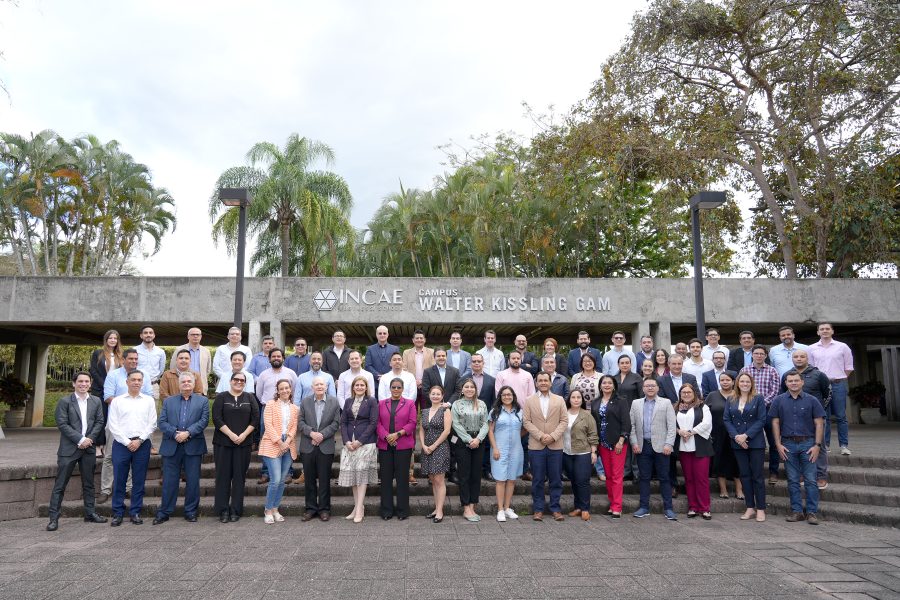
Experience, intelligence and courage are words that define Michele Quintano, the new Associate Dean of Executive Education and Strategic Innovation. In her hands lies not only the growth of new generations of Incaístas, but also the opportunity to generate a great impact in the region, and the commitment to continue the legacy of this institution. In short, a man of challenges and without fear of change. The perfect combination to be part of the Incaísta community.