Nº24. Special issue, November-December 2023.
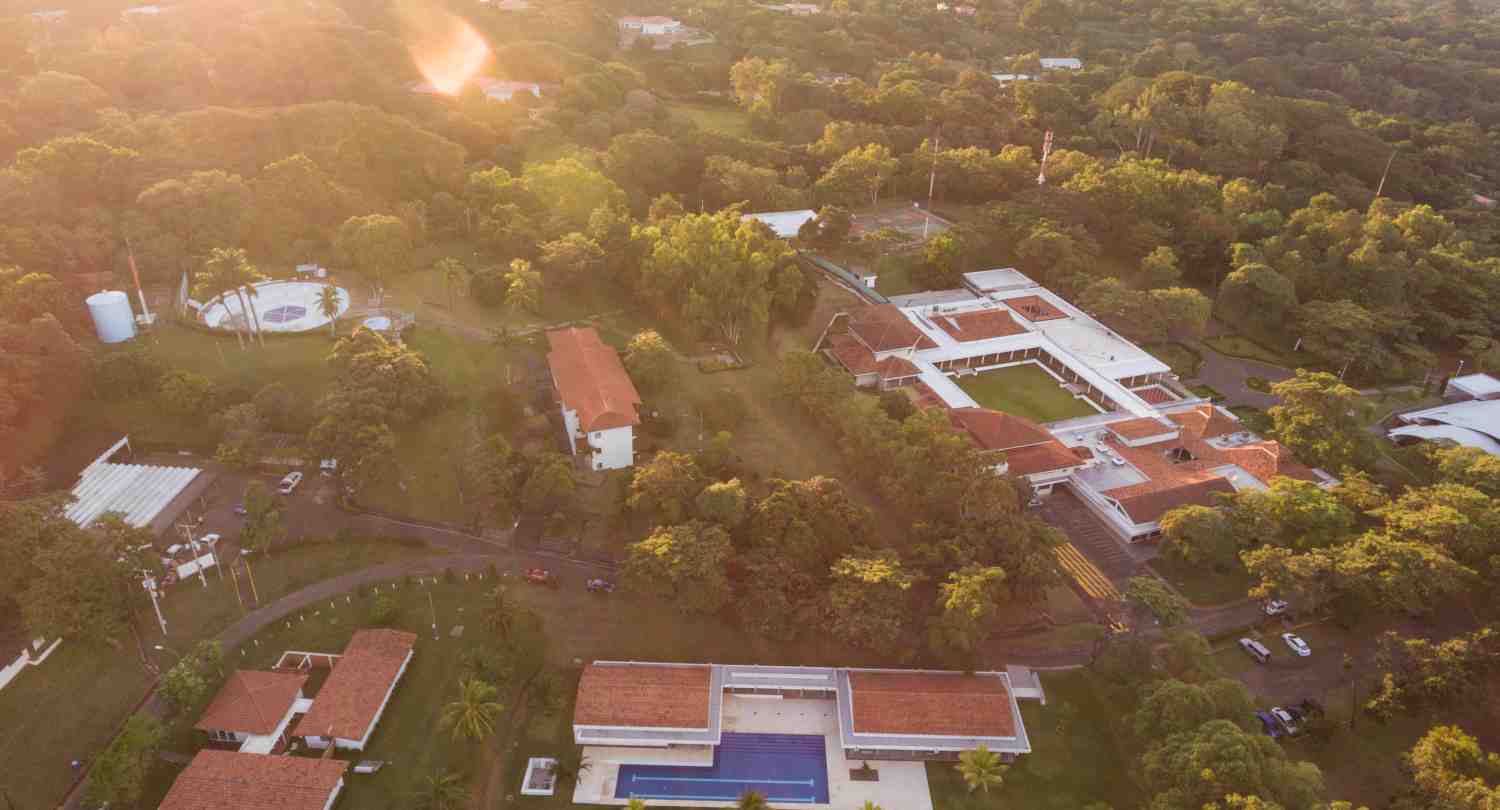
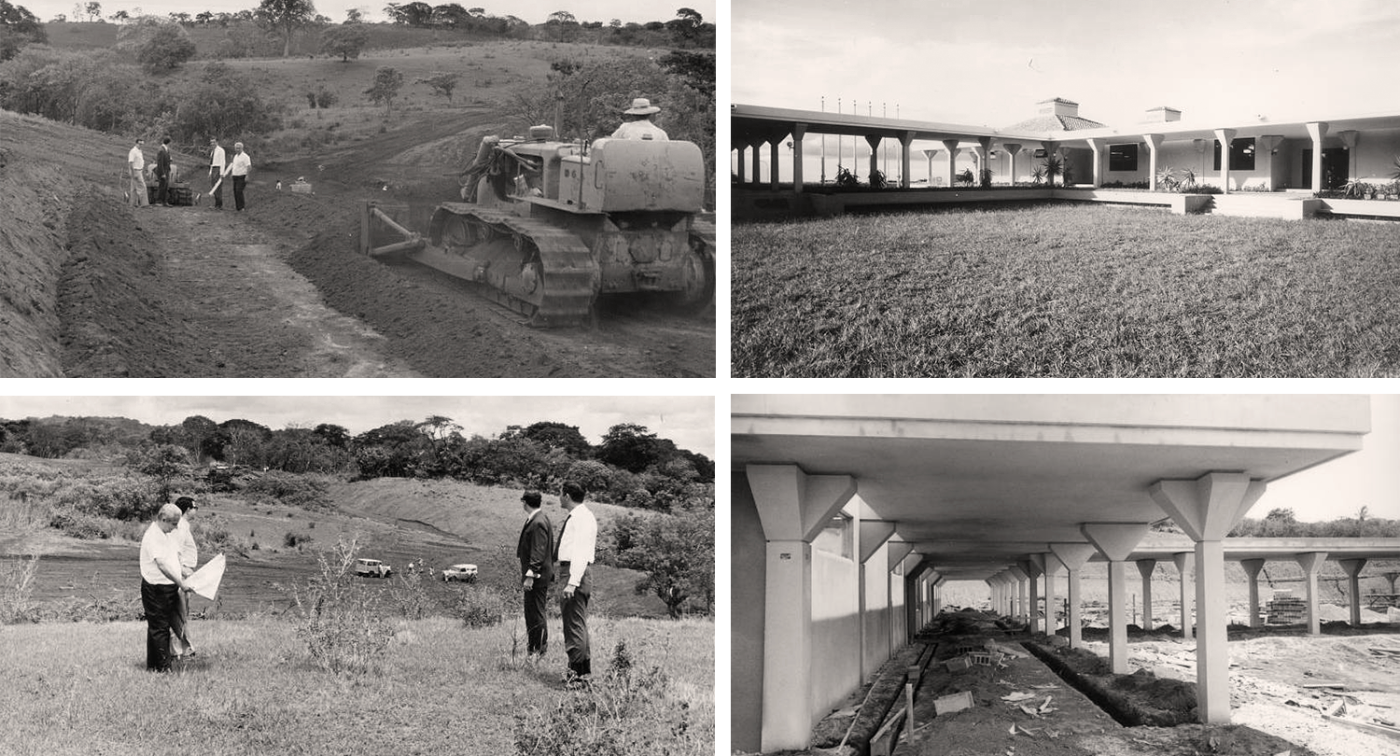
"This is the place!" shouted George Cabot Lodge as the small plane in which he was traveling flew over the hills of Montefresco, fifteen kilometers south of Managua. The location was ideal for the first campus of the new institute, created by visionary Central American entrepreneurs and committed academics from Harvard Business School (HBS).
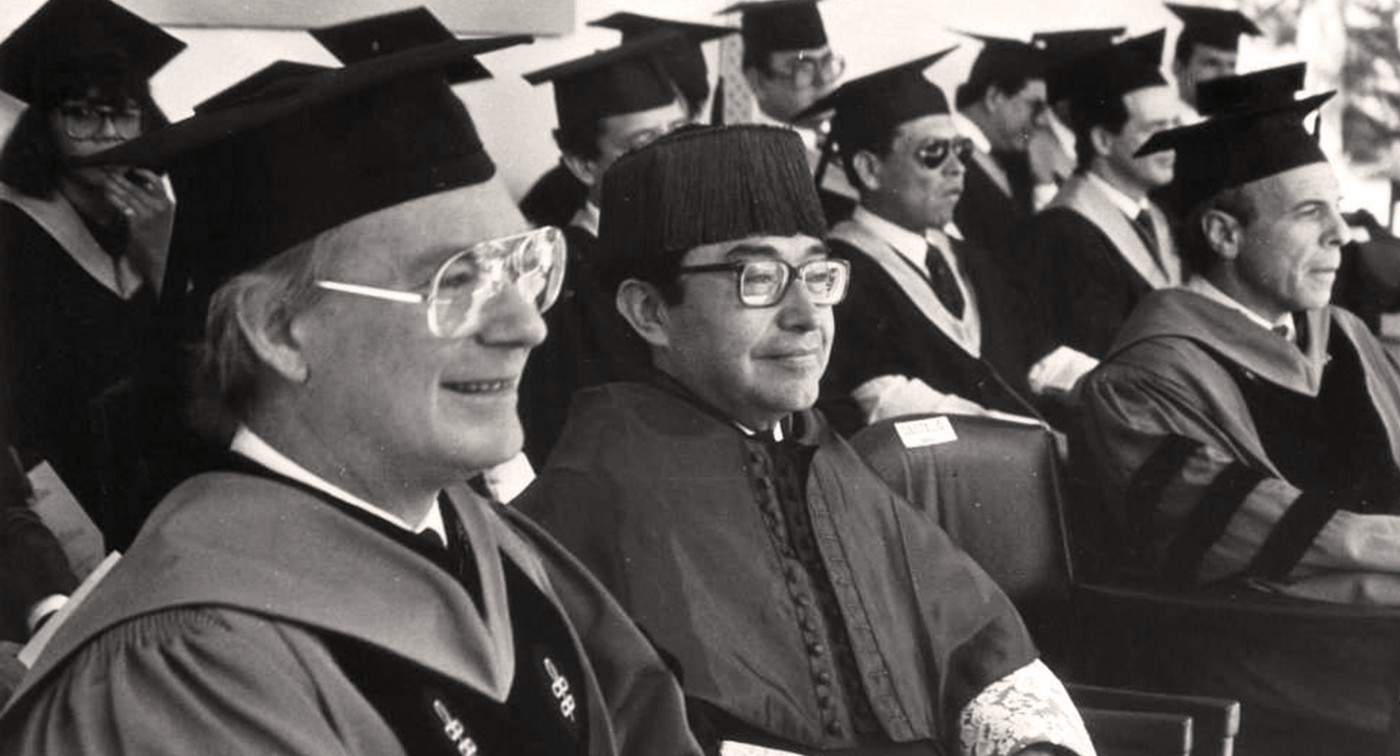
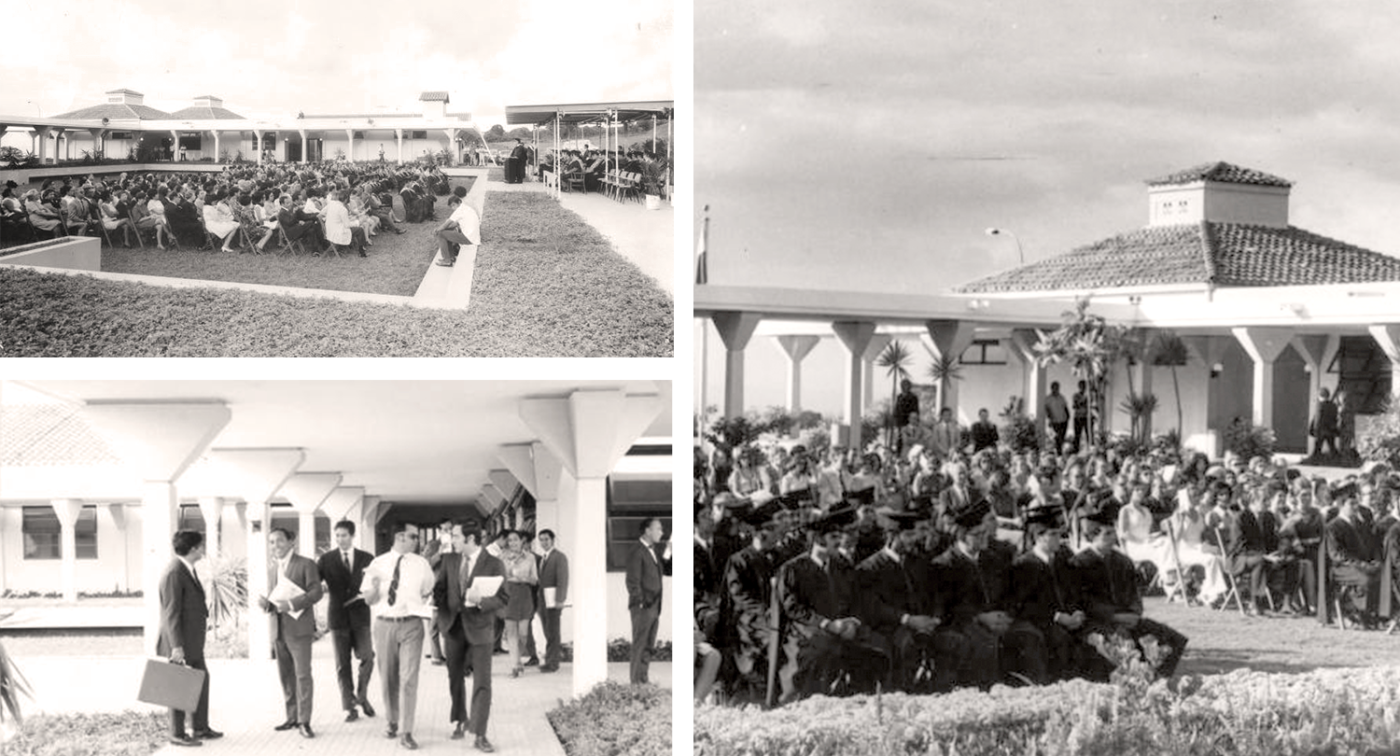
The first stone was laid on July 1, 1967, and the master's program began in September. Students were taught at the Central Bank, staying at the Lido Palace Hotel while construction was being completed. The first graduation took place in June 1969. That year I was a first year MBA student (Harvard) and George Lodge, co-founder of INCAE with Don Francisco De Sola, was my academic advisor.
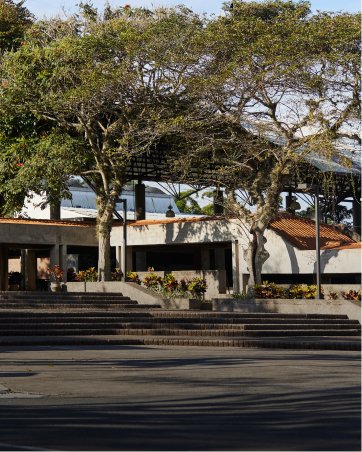
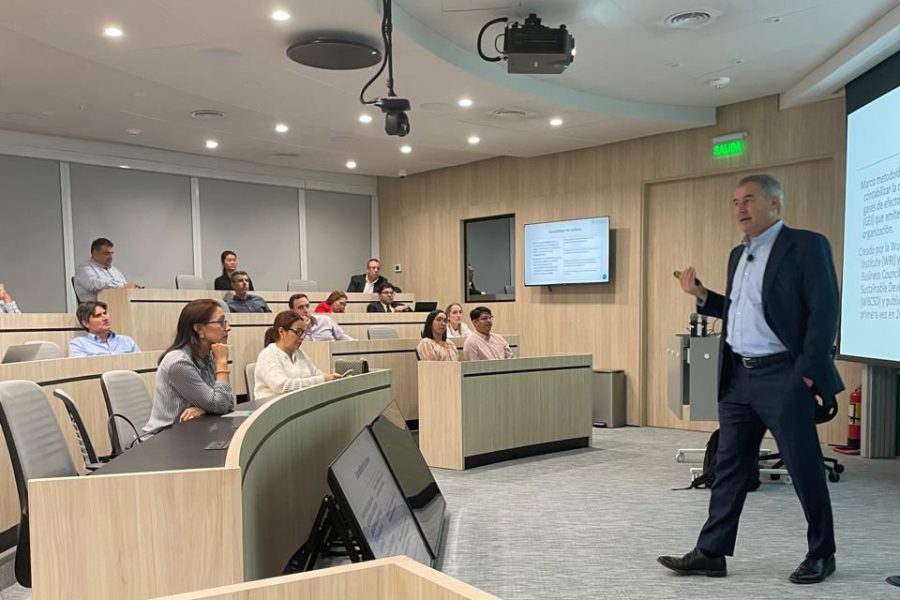
I first arrived on campus, as a case writer, in August 1971, driving a Chevrolet Vega from Boston. I will never forget the majestic view of Lake Xolotlán and the Momotombo volcano, which appeared strikingly as one drove up the cobblestone road to the Plaza de Banderas. Inside the buildings, the two classrooms reminded me of Aldrich Hall, semicircular classrooms with staggered raised levels, with movable blackboards behind the professor'spitto facilitate discussion of cases.
When the December 1972 earthquake destroyed Managua, the Montefresco campus suffered only a few fallen roof tiles. The Rector, Ernesto Cruz, called for students to return from their Christmas vacation to help in the distribution of food to the victims and responded to the request of the First Lady, Mrs. Hope Portocarrero, to lend Bob Mullins, professor of operations, to design the logistics.
Assigned by the Rector to coordinate the student teams, I met daily at El Retiro, Somoza's residence, with other members of the National Emergency Committee; but the campus in Montefresco served as the center of operations for the student groups. Later an annex was built to house the Advisory Center, a think tank for the reconstruction of Managua in collaboration with the Harvard Institute of International Development.
With the triumph of the revolution in July 1979, the future of INCAE in Nicaragua seemed uncertain, but it endured thanks to three events: first, the invitation to members of the new government to Harvard University, where they met some of the founders of the project INCAE; second, a meeting between then Rector Harry Strachan and the Vice President of Nicaragua, Sergio Ramirez Mercado, supposedly "a mere formality" in which Harry surprised him with a film projector, something contrary to protocol. "This is what we do," he told the vice-president at the end of the presentation. "We teach how to solve problems by discussing cases. If you want, we can keep doing it. If not, we leave."
The third, lesser known event was the meeting between two old friends: Walter Krüger, a food company executive in Texas (and nephew of the famous Nicaraguan composer Irwin Krüger) and Werner Ketelhöhn, of the Faculty of INCAE, in the lobby of a hotel in San Miguel, El Salvador, where we were giving a seminar to the Salvadoran agrarian reform agency. Walter told Werner that he was en route to Managua to start his new job as director of land reform. He asked if we could give the seminar to the agrarian reform ministry in Nicaragua.
This casual encounter was the beginning of the Agroindustrial Management Program, taught to the managers of all the state enterprises in the sector, by members of the Faculty of INCAE together with professors Jim Austin and Robert Anthony of HBS. In addition to government contributions in local currency and in kind-Soviet Lada vehicles and sacks of basic grains-financial support was provided by the Ford Foundation, the Inter-American Foundation and later by the governments of West Germany and Sweden.
Based on this experience, the financial sector requested its own graduate program and the industrial sector financed senior management programs. In neither program was there any attempt to influence the academic content; only the suggestion to focus on the basic functional areas (production, marketing, accounting and control, etc.) and always with the case method.
There was a request from Ernesto Leal, director of the town's industrial area (COIP) that the PAG director, Enrique Alvarado, did implement. Ernesto asked him to administer a multiple choice test at the end of each of the four weeks of the program and he did so, not only in the PAG-COIP but in all the PAGs of INCAE. The results were surprising: there was greater discipline among the participants, less partying during the weekends and a healthy competition among the groups to achieve the highest average score among their members.
When due to difficulties in recruiting students and faculty in Nicaragua we decided to move the MBA to Costa Rica, the then Rector Marc Lindenberg, from the new campus in Alajuela, asked me as Academic Director at Montefresco, to give the news personally to the Minister of the Presidency, Rodrigo Reyes. He was my liaison with the government and we had always had a cordial relationship, but upon hearing the news his face changed color and after a very tense silence he told me that the government could also play hardball, and that the travel agents who tried to take advantage of the exchange rate were in jail.
I explained to him that we had designed a new Functional Management Program (FMP) to start in Montefresco, an intensive 12-month program focused on the needs of managers in Nicaragua, with scholarships from Germany and Sweden, but he was no longer listening to me and left without finishing his lunch.
We met many years later and in the exchange of memories, he told me that the PAF had been very positive for Nicaragua. In fact, three of the current faculty members are PAF, which would continue for twelve years until it was replaced by the new Executive Master that was started in Montefresco in the 90s.
The programs we had offered the government on campus at Monfresco were undoubtedly controversial and misunderstood by those who did not understand the apolitical culture of INCAE. To some Guatemalan businessmen we were communists, while New York Times and Wall Street Journal reports saw us as a bastion of capitalism in a Marxist-Leninist regime.
But our graduates understood that our apoliticism was real, that all our colleagues at the Faculty, whether liberal or conservative, taught with the same commitment, regardless of whether the participants were civic leaders, businessmen or former guerrillas.
The culture that was formed in Montefresco, so precious, is a quality that teaches the case method. It opens the mind, allows us to understand different points of view, without bias. It has empowered us to lead processes of dialogue, a fundamental element of our mission.
The loss of the Montefresco campus is intensely personal for me. There I met Normita at a happy hour in the quadrangle, there we got married in the community house, there two of our daughters had their first classes at INCAÍTO with teacher Olguita Retana....
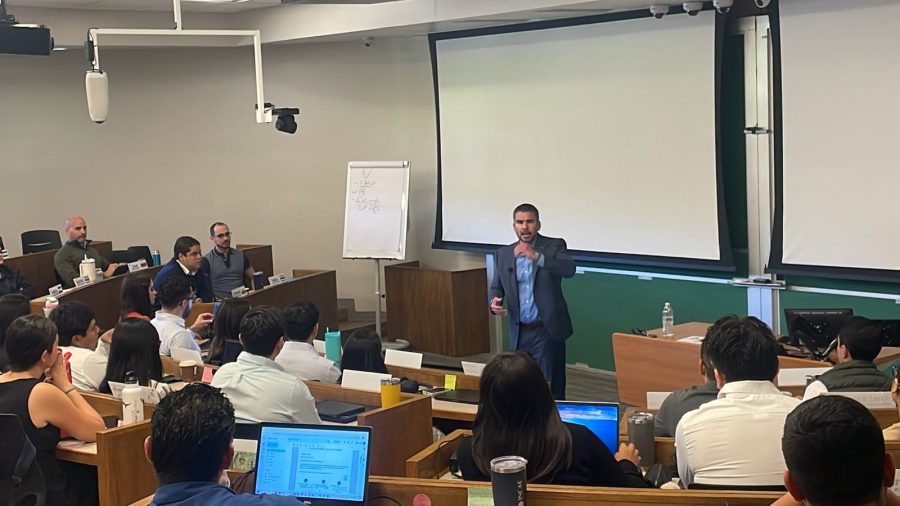
It is my hope that someday the campus will once again be a beacon of critical thinking, rigorous analysis, lively but respectful debate; that the semicircles of my favorite classrooms will once again be filled with idealistic young people and future business and social leaders.
May the vision of the professors who shared a passion for the case method and who are no longer with us-Bob, Werner, Enrique, Marc-brighten the hills of the Montefresco campus.